









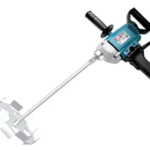


Concrete is one of the strongest building materials in the world, but only when it is properly placed and compacted. One of the most important tools used in construction for this purpose is a concrete vibrator. Whether you are working on a small slab or a large structural project, using a concrete vibrator can dramatically improve strength, durability, and finish quality.
In this guide, you’ll learn everything you need to know about concrete vibrators, including their uses, types, working principle, benefits, and practical applications in real construction environments.
What Is a Concrete Vibrator?
A concrete vibrator is a construction tool used to remove air bubbles and excess water from freshly poured concrete. It helps in compacting concrete by making it denser and more uniform.
When concrete is poured, it naturally traps air pockets. If these are not removed, the structure becomes weak and prone to cracks. A concrete vibrator solves this problem by vibrating the concrete mix, allowing it to settle properly around steel reinforcements and into every corner of the formwork.
Advantages of Using Concrete Vibrators
- Improves concrete strength and density
- Removes air pockets and voids
- Enhances bonding with steel reinforcement
- Provides smooth surface finish
- Reduces risk of structural defects
- Ensures long term durability
Working Principle of Concrete Vibrator
The working principle of a concrete vibrator is based on high-frequency vibration that temporarily fluidizes the concrete mix, allowing it to compact properly and become dense, strong, and void-free.
Mechanism
They generate high-frequency, low-amplitude vibrations ranging from approximately 2,800 to 15,000 RPM, depending on the type of vibrator and application.
Internal Process
Inside the vibrator head, an eccentric (unbalanced) weight rotates at high speed, producing continuous vibration that transfers into the surrounding concrete.
Compaction Action
These vibrations reduce internal friction between cement, sand, and aggregates, allowing the mix to behave like a fluid. This helps trapped air escape easily and ensures tight particle settlement.
Insertion Method
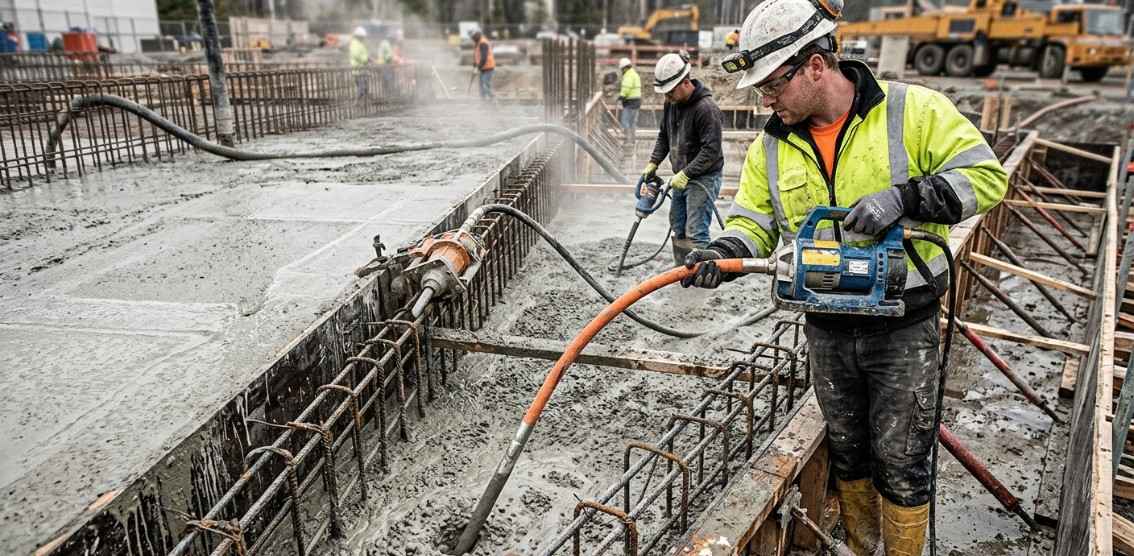
The vibrator is inserted vertically into fresh concrete for a few seconds at each point (usually until air bubbles stop rising or the surface becomes glossy) and then withdrawn slowly at a controlled rate to prevent void formation.
Main Uses of Concrete Vibrators
Concrete vibrators are widely used across infrastructure, residential, and industrial construction projects.
- Compaction: Eliminates trapped air bubbles and voids from freshly poured concrete, ensuring proper settling and uniform density.
- Structural Strength: Increases the overall density of concrete, resulting in higher compressive strength and long-lasting performance.
- Preventing Honeycombs: Removes weak, porous areas—especially in heavily reinforced zones—reducing the risk of honeycombing defects.
- Improved Bonding: Enhances bonding between concrete and reinforcement steel (rebar), ensuring structural integrity.
- Smoother Finish: Produces a more uniform, dense, and high-quality surface finish suitable for architectural and structural applications.
Types of Concrete Vibrators
Concrete vibrators are classified based on how vibration is transmitted into the concrete mass.
1- Internal (Needle/Poker) Vibrators
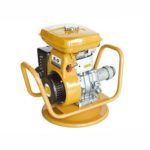
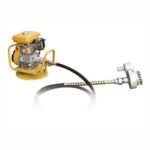
Internal vibrators are the most widely used type on construction sites. They consist of a motor unit (electric, petrol, or pneumatic) connected to a flexible shaft with a vibrating poker head. This head is inserted directly into fresh concrete to provide deep and effective compaction, especially in structural elements.
For reliable performance on-site, many professionals prefer durable options like the UNIV Power concrete vibrator, designed for consistent vibration and long working life in demanding conditions.
BEST USE
- Columns, beams, slabs, and footings
- Deep reinforcement areas
- High-strength structural concrete work
2- External (Formwork) Vibrators
External vibrators are fixed to the outside of formwork or molds. Instead of being inserted into concrete, they transfer vibration through the shuttering, making them ideal where internal access is limited or impossible.
BEST USE
- Precast concrete elements
- Thin walls and heavily reinforced sections
- Complex shapes with restricted internal access
3- Surface (Screed) Vibrators
Surface vibrators operate directly on the top layer of freshly poured concrete. They are commonly used for finishing and compacting shallow concrete depths, ensuring a smooth and level surface.
BEST USE
- Slabs and floor surfaces
- Pavements and driveways
- Concrete layers under 6 inches depth
4- Vibrating Tables
Vibrating tables are heavy-duty industrial platforms mounted on springs. When activated, the entire table vibrates to compact concrete placed in molds, ensuring uniform density and high-quality precast production.
BEST USE
- Precast blocks, pavers, and tiles
- Factory-based concrete production
- Laboratory test specimen preparation
Best Practices for Concrete Vibration
To achieve maximum efficiency and avoid structural defects, proper technique is essential:
- Vertical Insertion: Always insert the vibrator vertically to avoid contact with reinforcement bars and prevent entanglement.
- Proper Overlap: Use a systematic grid pattern with overlapping vibration zones to ensure complete and uniform compaction.
- Avoid Over-Vibration: Excess vibration can cause segregation, where heavier aggregates settle and water rises, weakening the concrete.
- Layered Compaction: For thicker pours, vibrate concrete in layers and slightly penetrate the previous layer to eliminate cold joints and ensure structural continuity.
Common Mistakes During Vibration
- Over vibration causing segregation of aggregates
- Under vibration leaving air pockets
- Improper insertion spacing
- Holding vibrator too long in one spot
- Touching reinforcement or formwork directly
Proper training and technique are essential to avoid these issues.
Top Concrete Vibrator Products for Reliable Performance
If you are looking for durable and efficient construction equipment, these UNIV Power concrete vibrator models are trusted for consistent performance and long service life on-site.
- Concrete Vibrator SV38: Heavy-duty vibrator for strong and reliable concrete compaction.
- Concrete Vibrator SV38D: Smooth and efficient model for consistent vibration output.
- Concrete Vibrator SZNA15: Compact design for precise compaction in tight areas.
- Concrete Vibrator Shaft: Flexible shaft ensuring effective vibration transfer and durability.
AI Overview
Concrete vibrators improve concrete strength by removing air voids and ensuring proper compaction. This blog explains uses, types, working principle, and applications in construction projects.
FAQs
What is a concrete vibrator and its uses?
A concrete vibrator is a construction tool used to remove air bubbles and compact freshly poured concrete. It improves strength, density, and surface finish of concrete structures.
What size concrete vibrator?
Concrete vibrators come in different sizes, typically ranging from 25 mm to 60 mm needle diameter. The size depends on the type of structure and reinforcement spacing.
For what purpose is a vibrator used?
A vibrator is used to ensure proper compaction of concrete by eliminating air voids. It helps increase durability, strength, and bonding with steel reinforcement.
What are the main uses of concrete?
Concrete is mainly used for building structures like buildings, roads, bridges, and foundations. It is valued for its strength, durability, and long-lasting performance.
Conclusion
Concrete vibrators are essential construction tools used to properly compact fresh concrete, remove air voids, and improve overall strength, durability, and surface finish. Their correct use helps prevent defects like honeycombing, cracks, and weak structural zones in both small and large-scale projects.
Understanding the right type and application method ensures better construction quality and long-term performance. For reliable construction equipment and expert support in the UAE, Al Silmiya Building Materials Trading provides trusted solutions and quality products to help builders achieve strong and efficient results.
Contact our experts for reliable products, expert guidance, and durable construction solutions that ensure maximum performance on every project.