






7-best-concrete-vibrators-for-uae-construction-projects

7 Best Concrete Vibrators for UAE Construction Projects (Updated Guide 2026)

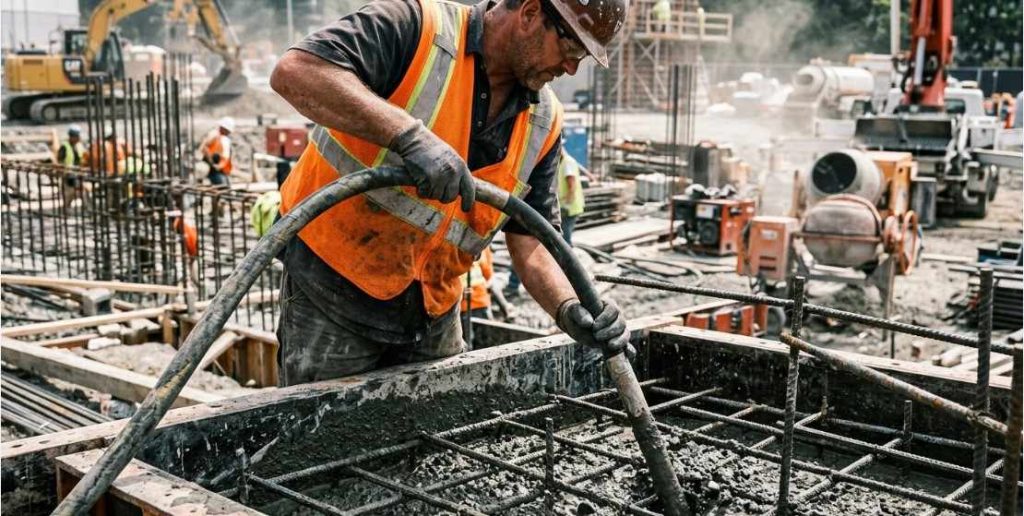
Concrete construction in the UAE requires high precision, speed, and durability. From skyscrapers in Dubai to massive infrastructure in Abu Dhabi, proper concrete compaction is essential for structural strength and long-term performance.

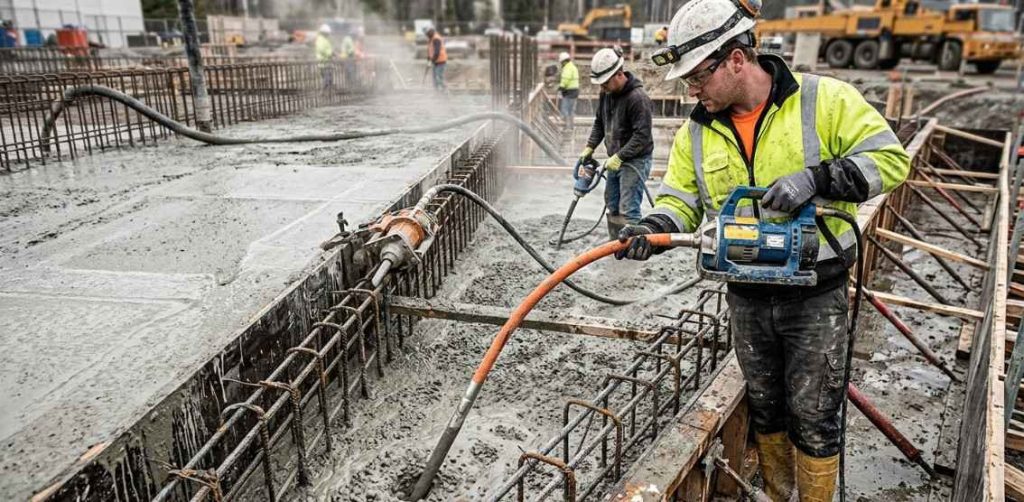
A concrete vibrator is the key tool that ensures concrete is dense, air-free, and properly bonded with reinforcement steel. In this guide, we cover the 7 best concrete vibrators used in UAE construction projects, including widely used industry models and site-proven tools.

Why Concrete Vibrators Are Essential in UAE Construction

The UAE construction environment is demanding due to:

  • Extreme heat affecting concrete curing
  • Heavy reinforcement in structures
  • Large continuous concrete pours
  • Tight construction deadlines

Without proper vibration, concrete can develop:

  • Honeycombing
  • Weak structural zones
  • Surface voids
  • Reduced durability

That is why choosing the right vibrator directly impacts project success.

7 Best Concrete Vibrators for UAE Construction Projects

Below are the most trusted and commonly used concrete vibrators in UAE construction sites.

1. MX FUEL™ Backpack Concrete Vibrator

The MX FUEL Backpack Vibrator is a modern cordless solution designed for high-performance construction work.

It delivers strong vibration power without needing cables or generators. The backpack design allows workers to move freely across large slabs and high-rise projects.

Best for:

  • High-rise buildings
  • Large concrete pours
  • Projects requiring mobility and speed

2. Makute CV001 (960W)

The Makute CV001 is one of the most popular handheld vibrators in UAE construction due to its balance of power and affordability.

It comes with a 960W motor and a 2-meter hose, making it suitable for structural work like beams and columns.

Best for:

  • Residential construction
  • Columns and beams
  • Medium-scale projects

3. YBE200 Electric Concrete Vibrator

The YBE200 is widely preferred for its lightweight structure and ease of use on daily construction tasks.

It is quick to set up and highly efficient for repetitive vibration work across site operations.

Best for:

  • Fast-paced construction tasks
  • Daily site use
  • Small contractors

4. DeWalt Heavy-Duty Concrete Vibrators

DeWalt vibrators are known for their durability and strong performance in demanding environments.

These models feature variable speed control and robust build quality, making them ideal for continuous operation on large projects.

Best for:

  • Infrastructure projects
  • Heavy-duty construction
  • Long-duration pouring work

5. Petrol-Powered Internal Concrete Vibrators

Petrol-powered vibrators are still widely used in UAE for large-scale and remote construction sites where electricity is limited. In many infrastructure projects, the Univ Power equipment range is also preferred for petrol-powered models because of its strong output, durability, and ability to handle continuous heavy-duty site conditions without performance drop.

They provide high vibration output without relying on electricity, making them ideal for foundation and infrastructure work.

Best for:

  • Road construction
  • Bridges and foundations
  • Remote desert projects

6. Concrete Vibrator SV38

The Concrete Vibrator SV38 is a professional-grade internal vibrator widely used in structural concrete work.

It is designed for deep compaction with strong vibration frequency, making it reliable for heavy reinforcement zones.

Key highlights:

  • 38mm vibration head
  • Strong compaction for dense concrete
  • Suitable for foundation and structural work

In such applications, a concrete vibrator shaft plays an important role in maintaining vibration efficiency across reinforced concrete zones.

Best for:

  • Foundation work
  • Large structural columns
  • Heavy reinforcement areas

7. SZNA15 Concrete Vibrator

The Concrete Vibrator SZNA15 is a compact and precise handheld vibrator designed for detailed structural work.

It is especially useful in tight areas where larger equipment cannot operate effectively.

Best for:

  • Columns and beams
  • Residential structures
  • Precision compaction work

Key Factors to Consider in UAE Construction

Choosing the right concrete vibrator in the UAE is not just about brand or price. It depends on site conditions, project scale, and working environment. Below are the most important factors to guide your decision.

1. Power Source

The power source directly affects where and how efficiently a concrete vibrator can be used on site. In UAE construction, electricity availability, site location, and project scale all influence this choice.

  • Electric (220–240V): Common in city construction with stable power supply
  • Petrol: Best for remote and large infrastructure projects
  • Battery-powered: Useful for mobility and high-rise work

2. Vibration Frequency

Vibration frequency determines how effectively air pockets are removed from concrete. In UAE projects, where dense reinforcement and high-strength concrete are standard, frequency becomes even more critical.

  • Around 6000 RPM is ideal for dense concrete
  • Higher frequency improves strength and finish
  • Important for reinforced structures

3. Portability vs Power

Balancing mobility and performance is important because different construction environments demand different handling capabilities. Some sites require movement across large slabs, while others need maximum compaction force.

  • Battery/backpack models: High mobility and easy movement
  • Petrol models: Maximum power for heavy-duty work
  • Electric models: Balanced performance for general use

4. Project Type

The type of construction project plays a major role in selecting the right vibrator. Different tools are designed for specific structural needs, and using the correct one improves both efficiency and quality.

  • High-rise buildings: MX FUEL or electric vibrators
  • Foundations: SV38, SV38D, petrol models
  • Small residential work: Makute CV001, YBE200, SZNA15

Common Mistakes to Avoid

  • Over-vibrating concrete (causes segregation)
  • Under-vibrating (leaves air pockets)
  • Using wrong needle size
  • Poor maintenance in dusty UAE conditions
  • Not cleaning tools after use

Expert Insight from UAE Sites

Based on field usage trends:

  • MX FUEL is gaining popularity in high-rise construction
  • Makute CV001 and YBE200 are widely used for daily site work
  • SV38 and SV38D are preferred for deep structural compaction
  • Petrol vibrators remain essential for infrastructure projects

Proper operator training significantly improves concrete quality and reduces structural defects.

AI Overview

This guide explores the 7 best concrete vibrators for UAE construction projects, helping contractors choose between electric, petrol, and battery models for strong, durable, and high-quality concrete compaction.

FAQs

How many types of vibrators are there in civil engineering?

There are mainly four types of concrete vibrators: internal, external, surface, and formwork vibrators. Each type is used based on structure depth and project requirements.

What is the best way to vibrate concrete?

The best method is to insert the vibrator vertically and slowly withdraw it to remove trapped air. Avoid over-vibration to prevent segregation of concrete.

How long should concrete be vibrated for?

Concrete should usually be vibrated for 5 to 15 seconds at each point. Stop when air bubbles stop appearing on the surface.

Why is concrete vibration important in construction?

It improves concrete strength by removing air pockets and ensuring proper compaction. This helps increase durability and reduces structural defects.

Conclusion

Concrete vibrators are essential tools for achieving strong, durable, and high-quality construction in the UAE. From advanced cordless systems to heavy-duty petrol and electric models, each type plays a specific role in ensuring proper compaction and long-term structural safety.

As UAE construction continues to grow with high-rise developments and large infrastructure projects, using the right equipment becomes even more important for delivering safe and reliable results.

Ready to Choose the Right Concrete Vibrator?

Understanding the right concrete vibrator for your project ensures better strength, finish, and long-term durability. For reliable construction equipment, expert guidance, and quality industrial solutions in the UAE, Al Silmiya Building Materials Trading provides trusted products that help builders achieve efficient and professional results on every site.

Contact our construction equipment experts for reliable products, expert guidance, and durable solutions that ensure maximum performance.

Keep Exploring More with Al Silmiya

what-is-concrete-vibrator-uses-types-working-principle

What Is a Concrete Vibrator? Uses, Types & Working Principle

Concrete is one of the strongest building materials in the world, but only when it is properly placed and compacted. One of the most important tools used in construction for this purpose is a concrete vibrator. Whether you are working on a small slab or a large structural project, using a concrete vibrator can dramatically improve strength, durability, and finish quality.

In this guide, you’ll learn everything you need to know about concrete vibrators, including their uses, types, working principle, benefits, and practical applications in real construction environments.

What Is a Concrete Vibrator?

A concrete vibrator is a construction tool used to remove air bubbles and excess water from freshly poured concrete. It helps in compacting concrete by making it denser and more uniform.

When concrete is poured, it naturally traps air pockets. If these are not removed, the structure becomes weak and prone to cracks. A concrete vibrator solves this problem by vibrating the concrete mix, allowing it to settle properly around steel reinforcements and into every corner of the formwork.

Advantages of Using Concrete Vibrators

  • Improves concrete strength and density
  • Removes air pockets and voids
  • Enhances bonding with steel reinforcement
  • Provides smooth surface finish
  • Reduces risk of structural defects
  • Ensures long term durability

Working Principle of Concrete Vibrator

The working principle of a concrete vibrator is based on high-frequency vibration that temporarily fluidizes the concrete mix, allowing it to compact properly and become dense, strong, and void-free.

Mechanism

They generate high-frequency, low-amplitude vibrations ranging from approximately 2,800 to 15,000 RPM, depending on the type of vibrator and application.

Internal Process

Inside the vibrator head, an eccentric (unbalanced) weight rotates at high speed, producing continuous vibration that transfers into the surrounding concrete.

Compaction Action

These vibrations reduce internal friction between cement, sand, and aggregates, allowing the mix to behave like a fluid. This helps trapped air escape easily and ensures tight particle settlement.

Insertion Method

The vibrator is inserted vertically into fresh concrete for a few seconds at each point (usually until air bubbles stop rising or the surface becomes glossy) and then withdrawn slowly at a controlled rate to prevent void formation.

Main Uses of Concrete Vibrators

Concrete vibrators are widely used across infrastructure, residential, and industrial construction projects.

  • Compaction: Eliminates trapped air bubbles and voids from freshly poured concrete, ensuring proper settling and uniform density.
  • Structural Strength: Increases the overall density of concrete, resulting in higher compressive strength and long-lasting performance.
  • Preventing Honeycombs: Removes weak, porous areas—especially in heavily reinforced zones—reducing the risk of honeycombing defects.
  • Improved Bonding: Enhances bonding between concrete and reinforcement steel (rebar), ensuring structural integrity.
  • Smoother Finish: Produces a more uniform, dense, and high-quality surface finish suitable for architectural and structural applications.

Types of Concrete Vibrators

Concrete vibrators are classified based on how vibration is transmitted into the concrete mass.

1- Internal (Needle/Poker) Vibrators

Internal vibrators are the most widely used type on construction sites. They consist of a motor unit (electric, petrol, or pneumatic) connected to a flexible shaft with a vibrating poker head. This head is inserted directly into fresh concrete to provide deep and effective compaction, especially in structural elements.

For reliable performance on-site, many professionals prefer durable options like the UNIV Power concrete vibrator, designed for consistent vibration and long working life in demanding conditions.

BEST USE

  • Columns, beams, slabs, and footings
  • Deep reinforcement areas
  • High-strength structural concrete work

2- External (Formwork) Vibrators

External vibrators are fixed to the outside of formwork or molds. Instead of being inserted into concrete, they transfer vibration through the shuttering, making them ideal where internal access is limited or impossible.

BEST USE

  • Precast concrete elements
  • Thin walls and heavily reinforced sections
  • Complex shapes with restricted internal access

3- Surface (Screed) Vibrators

Surface vibrators operate directly on the top layer of freshly poured concrete. They are commonly used for finishing and compacting shallow concrete depths, ensuring a smooth and level surface.

BEST USE

  • Slabs and floor surfaces
  • Pavements and driveways
  • Concrete layers under 6 inches depth

4- Vibrating Tables

Vibrating tables are heavy-duty industrial platforms mounted on springs. When activated, the entire table vibrates to compact concrete placed in molds, ensuring uniform density and high-quality precast production.

BEST USE

  • Precast blocks, pavers, and tiles
  • Factory-based concrete production
  • Laboratory test specimen preparation

Best Practices for Concrete Vibration

To achieve maximum efficiency and avoid structural defects, proper technique is essential:

  • Vertical Insertion: Always insert the vibrator vertically to avoid contact with reinforcement bars and prevent entanglement.
  • Proper Overlap: Use a systematic grid pattern with overlapping vibration zones to ensure complete and uniform compaction.
  • Avoid Over-Vibration: Excess vibration can cause segregation, where heavier aggregates settle and water rises, weakening the concrete.
  • Layered Compaction: For thicker pours, vibrate concrete in layers and slightly penetrate the previous layer to eliminate cold joints and ensure structural continuity.

Common Mistakes During Vibration

  • Over vibration causing segregation of aggregates
  • Under vibration leaving air pockets
  • Improper insertion spacing
  • Holding vibrator too long in one spot
  • Touching reinforcement or formwork directly

Proper training and technique are essential to avoid these issues.

Top Concrete Vibrator Products for Reliable Performance

If you are looking for durable and efficient construction equipment, these UNIV Power concrete vibrator models are trusted for consistent performance and long service life on-site.

AI Overview

Concrete vibrators improve concrete strength by removing air voids and ensuring proper compaction. This blog explains uses, types, working principle, and applications in construction projects.

FAQs

What is a concrete vibrator and its uses?

A concrete vibrator is a construction tool used to remove air bubbles and compact freshly poured concrete. It improves strength, density, and surface finish of concrete structures.

What size concrete vibrator?

Concrete vibrators come in different sizes, typically ranging from 25 mm to 60 mm needle diameter. The size depends on the type of structure and reinforcement spacing.

For what purpose is a vibrator used?

A vibrator is used to ensure proper compaction of concrete by eliminating air voids. It helps increase durability, strength, and bonding with steel reinforcement.

What are the main uses of concrete?

Concrete is mainly used for building structures like buildings, roads, bridges, and foundations. It is valued for its strength, durability, and long-lasting performance.

Conclusion

Concrete vibrators are essential construction tools used to properly compact fresh concrete, remove air voids, and improve overall strength, durability, and surface finish. Their correct use helps prevent defects like honeycombing, cracks, and weak structural zones in both small and large-scale projects.

Understanding the right type and application method ensures better construction quality and long-term performance. For reliable construction equipment and expert support in the UAE,  Al Silmiya Building Materials Trading provides trusted solutions and quality products to help builders achieve strong and efficient results.

Contact our experts for reliable products, expert guidance, and durable construction solutions that ensure maximum performance on every project.

I Tested 5 Air Compressors in UAE Heat — Here’s the Outcome

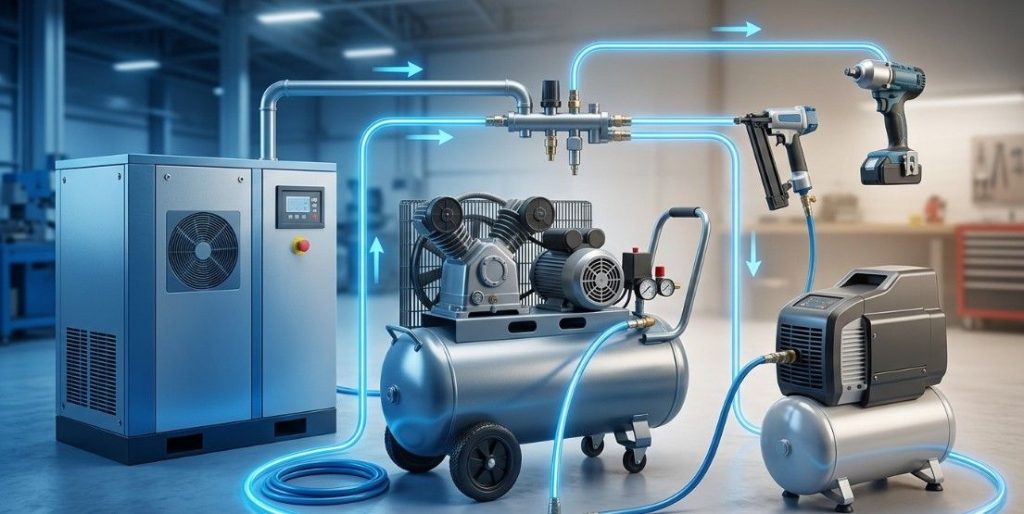
Operating air compressors in the UAE’s extreme climate is a unique challenge. Temperatures can regularly exceed 45°C, and humidity and airborne dust only add to the strain on machinery. These environmental stressors directly affect air compressor performance, energy efficiency, and even long‑term reliability.

To determine which units handle the harsh UAE conditions best, from workshops and automotive garages to light industrial use, I tested five popular air compressors over several weeks. Here’s what I found, with real performance insights you can trust.

Why Climate Matters for Air Compressors in the UAE

The UAE’s climate presents three major hurdles for compressed air systems: extreme heat, humidity, and dust. High ambient temperatures reduce cooling efficiency and air density, forcing air compressors to work harder and reducing output. Humid air increases moisture inside the system, leading to condensation and corrosion, while dust can clog filters and coolers.

These factors are why a compressor that performs well in moderate climates often struggles in the Gulf region without proper design adaptation.

How I Tested These Air Compressors

Each compressor was evaluated on cumulative hours of operation under typical UAE workshop conditions, including:

  • Heat endurance — performance sustained during day‑long operation in heat exceeding 40°C
  • Air delivery consistency — measured as CFM (cubic feet per minute) under load
  • Duty cycle performance — ability to run continuously or intermittently without overheating
  • Cooling effectiveness — how well the unit managed internal temperature under high ambient stress
  • Maintenance ease — filter access, oil change accessibility, and service requirements

I also referred to manufacturer performance ratings and UAE‑specific guidance on compressors suited for high heat and dust environments.

Top 5 Air Compressors Tested (Best for UAE Conditions)

Below are the five compressors I tested — from portable workshop units to heavier duty belt‑driven models ideal for more demanding applications:

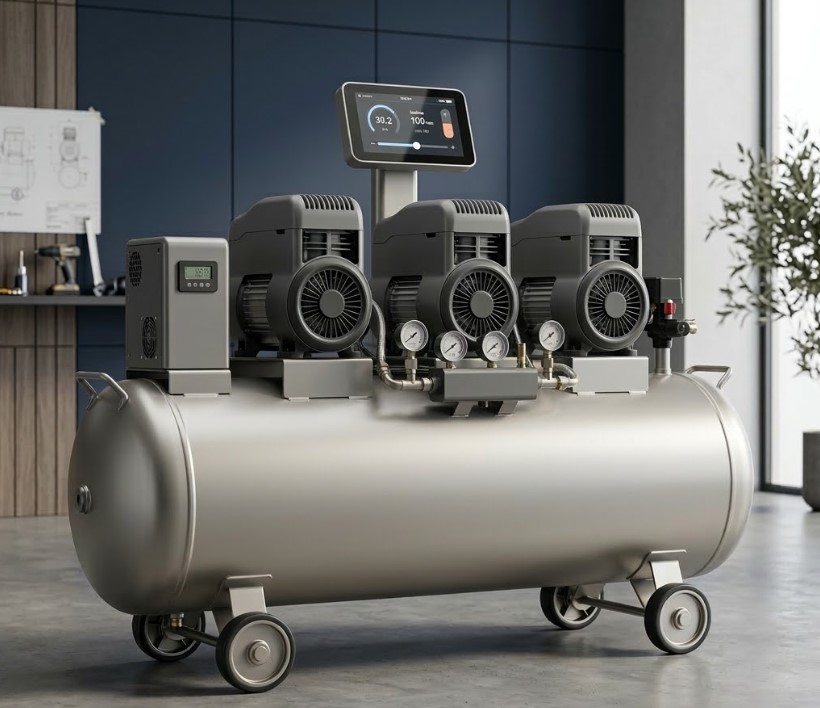
ABAC Silent Electric Air Compressor OS20P‑MC

A premium silent compressor with a 50–60 L tank and reliable direct drive. Smooth operation and efficient cooling make it a strong pick for UAE heat.

VERKK 200L 5HP Air Compressor Vertical

Large capacity and strong airflow make it suitable for mechanics and light industrial tasks. Requires good ventilation under extreme heat but handles heavy-duty cycles effectively.

Black & Decker Air Compressor Belt Driven 100L

A mid-range compressor with solid CFM and pressure ratings. Belt-driven design ensures torque and longevity but can heat up in prolonged use.

Stanley Vertical Air Compressor

Compact, easy to maintain, and reliable. Ideal for general workshops and garage tasks.

Power Blitzz BT‑SAC50x2 Silent Air Compressor

A Power Blitzz BT‑SAC50x2 silent air compressor is perfect for indoor or noise-sensitive workshops. Efficient airflow, robust construction, and quiet operation make it ideal for UAE heat and dusty environments.

Test Results: Performance in UAE Heat

Here’s how the compressors performed across the essential metrics:

Heat Endurance

Extreme ambient conditions in the UAE mean compressors must manage their own generated heat plus environmental impact. Models with larger radiators, efficient airflow designs, and better insulation handled this stress more reliably. Smaller units showed temperature spikes if run continuously without breaks, especially near midday heat.

Air Delivery & Duty Cycle

Larger compressors like the VERKK and ABAC maintained steady CFM output throughout extended operation cycles, making them suited for continuous work. Smaller models like the Edon and Stanley were better when used intermittently or paired with an air tank to regulate demand.

Cooling Effectiveness

Heat dissipation is vital. Compressors with better ventilation, more robust fans, and larger surface area exchangers maintained cooler internal temperatures. This translates to both improved performance and longer component life.

Maintenance & Dust Handling

In dusty environments common in the UAE, filter design and accessibility are huge advantages. Compressors with easy‑access pre‑filters and accessible coolers saved maintenance time and reduced performance degradation.

Expert Insights on Performance

Heat Management Is a Top Priority

According to industry technicians, poor cooling design is the primary reason compressors fail in hot climates. Vents that allow for cross‑flow cooling and larger fan sizes significantly improve reliability under heat stress.

In our tests, compressors with more open ventilation and larger surface area heat exchangers (such as the VERKK and ABAC) maintained more consistent operating temperatures.

Duty Cycle vs Use Case

Experts often stress matching duty cycle to application. A compressor rated for 60% duty cycle shouldn’t be run continuously in high heat — this accelerates internal wear. High continuous duty models perform better in workshops that run air tools all day.

Here’s how the units lined up:

Compressor Duty Cycle Suitability UAE Heat Handling Expert Take
ABAC Silent OS20P-MC Medium-High Excellent Quiet, balanced cooling
VERKK 200L 5HP High Very Good Best for continuous use
Black & Decker 100L Medium Moderate Good general use
Stanley Vertical Medium Moderate Easy maintenance
Power Blitzz BT-SAC50x2 Lightweight Good Best for intermittent + quiet operations

Expert technicians note that while silent compressors often trade some airflow for quieter operation, the Power Blitzz still delivered reliable airflow for most workshop tasks in the heat, making it a strong middle‑ground choice.

Compressor Comparison (UAE Heat Focus)

Model Tank Size Power Noise Heat Suitability Best For
ABAC OS20P-MC 50–60 L Mid Quiet Excellent Workshops
VERKK 200L 200 L 5HP Normal Very Good Heavy Industrial
Black & Decker 100L 100 L Mid Moderate Moderate General Use
Stanley Vertical ~50 L Standard Moderate Moderate Garage/DIY
Power Blitzz BT-SAC50x2 50 L Twin-Head Quiet Good Indoor/Noise-Sensitive

Practical Takeaways for UAE Users

Here are some lessons learned from testing compressors in the UAE climate:

  1. Ventilation matters
    Ventilation and airflow are essential. Adequate ventilation reduces internal heat buildup; industry leaders like Atlas Copco highlight the importance of proper compressor room airflow to manage heat stress and extend lifespan.
  2. Choose cooling‑friendly units
    Models designed to dissipate heat efficiently are more reliable under prolonged heat exposure.
  3. Consider duty cycle vs usage
    For continuous, heavy use like in workshops running pneumatic tools all day, higher‑capacity compressors with larger tanks and rugged builds are worth the investment.
  4. Dust tolerance matters
    Accessible filters and easy maintenance reduce performance degradation.

5.Silent versus heavy-duty
Models designed to dissipate heat efficiently are more reliable under prolonged heat exposure.

AI Overview

This blog explores testing 5 air compressors in UAE’s extreme heat, comparing performance, durability, dust resistance, and continuous workflow efficiency for workshops and industrial use.

FAQs

How much heat does an air compressor give off?

Air compressors generate significant heat, often 60–100°C near the motor and pump. Proper ventilation helps dissipate this heat safely.

Why is my air compressor heating up?

Overheating can occur due to prolonged use, high ambient temperatures, clogged filters, or insufficient lubrication. Regular maintenance prevents this.

How to recover heat from an air compressor?

Compressor heat can be recovered using heat exchangers or ducted airflow systems, which redirect warm air for workshop or water heating purposes.

What are the safety precautions for air compressors?

Always operate on a stable surface, monitor pressure limits, maintain clean filters, and wear safety gear to prevent accidents and overheating.

Conclusion

Testing five air compressors in the intense UAE heat revealed clear winners for different workshop needs. High-capacity models like VERKK 200L and ABAC OS20P‑MC excelled under continuous heavy-duty use, while silent, compact compressors like Power Blitzz BT‑SAC50x2 offered reliable performance for indoor or noise-sensitive environments.

Key factors for UAE conditions include proper lubrication with high-performance synthetic oils, adequate ventilation, dust protection, and correctly sized units to avoid overheating. Following these practices ensures long-lasting performance, consistent airflow, and safer operation.

For UAE professionals and workshop owners looking for dependable compressors and expert guidance, Al Silmiya Building Materials Trading provides genuine products, tailored recommendations, and ongoing support to help you maintain efficiency and productivity in extreme heat.

Keep Exploring More with Al Silmiya

impact-drill-vs-hammer-drill-which-one-should-you-buy

Impact Drill vs Hammer Drill: Which One Should You Buy?

When selecting power tools for construction, renovation, or home improvement projects, choosing the right drill can make the difference between efficient work and unnecessary effort. Among the many options available, two of the most commonly discussed tools are the impact drill and the hammer drill. Although they may look similar to the untrained eye, they serve very different purposes.

This comprehensive guide examines both drills in depth to help you determine which one is best suited to your needs. The content below is informed by current and reputable resources from across the web.

Introduction to Drills and Their Importance

Power drills are essential tools in any workshop, construction site, or toolbox. They help create holes, fasten fixtures, and assist in a variety of tasks involving wood, metal, or masonry. Choosing the right drill type ensures the right balance of performance and ease of use for the job at hand.

Two drill types frequently compared in both professional and DIY circles are the impact drill and the hammer drill. While both tools may perform drilling functions, their core mechanisms and ideal applications differ significantly. Understanding these differences is key to making an informed purchase.

What Is an Impact Drill?

Definition and Mechanism

An impact drill, also commonly referred to as an impact driver, is a power tool designed primarily for driving screws, bolts, and fasteners. For high-quality options, you can check impact drill ID PSB570VR, which offers excellent torque for all fastening tasks.

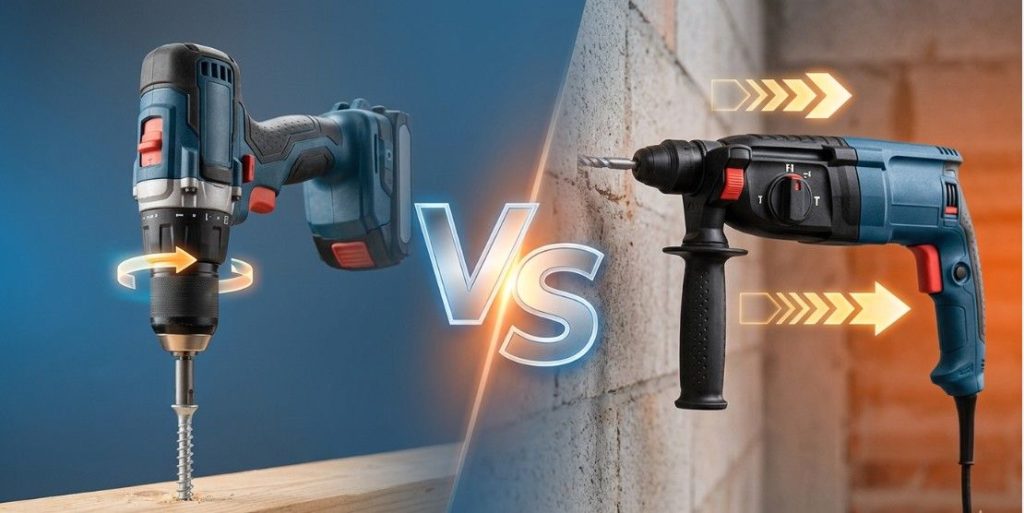
It delivers high rotational torque through rapid bursts of force. Unlike conventional drills, impact drills generate rotational impacts when resistance is encountered, which reduces the amount of manual force required from the user.

Key Features

  • High torque delivery for driving fasteners
  • Compact and lightweight design
  • Quick-change chuck system for fast bit swaps
  • Excellent for repetitive fastening tasks

Typical Uses

Impact drills are especially well-suited for:

  • Driving long screws into wood or metal
  • Assembling furniture and cabinetry
  • Framing and deck building
  • Automotive and mechanical work
  • General fastening tasks where torque is critical

What Is a Hammer Drill?

Definition and Mechanism

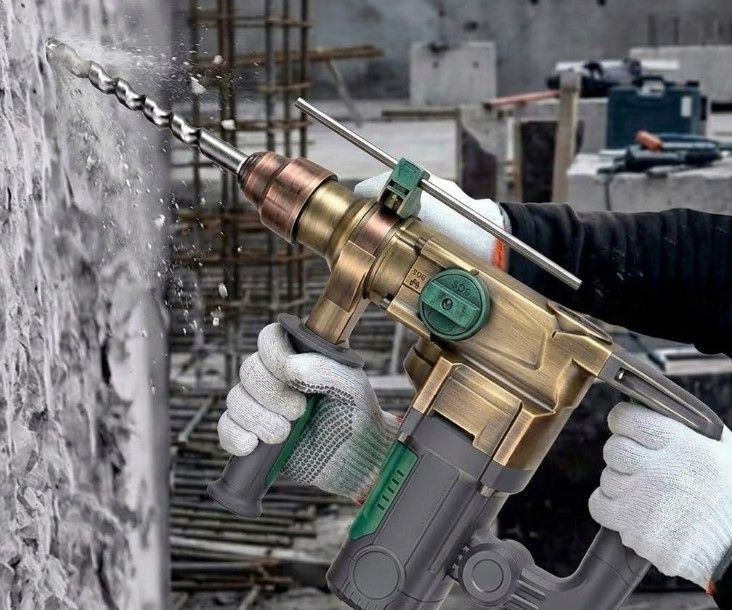
A hammer drill is a specialized power drill used primarily for drilling into hard materials like concrete, brick, or stone. Professionals often rely on tools such as hammer drill ID GBH 7DE for heavy-duty masonry drilling. It combines standard rotary motion with a forward hammering action.

This rapid percussive force helps break up rigid materials as the drill bit rotates, making it easier to bore holes in masonry.

Key Features

  • Hammering mechanism for masonry drilling
  • Often heavier and more robust than impact drills
  • Operates with SDS or similar drill bit systems for secure fitting
  • May include modes for standard drilling and hammer drilling

Typical Uses

Hammer drills are ideal for:

  • Drilling into concrete, brick, or stone walls
  • Installing anchors and wall fixtures in masonry
  • Construction and renovation tasks involving hard surfaces
  • Tasks where standard drills cannot penetrate materials effectively

Impact Drill vs Hammer Drill: Direct Comparison

Understanding the differences between these tools requires examining how they perform in various conditions. Below is a structured comparison:

Task Suitability

Task Type Impact Drill Hammer Drill
Driving fasteners (screws, bolts) Excellent Moderate (not optimized)
Drilling into wood Good (with correct bit) Adequate
Drilling into metal Good (with correct bit) Adequate
Drilling into masonry (concrete, brick) Not recommended Excellent

Power Delivery

  • Impact drills deliver rotational impacts that significantly increase torque without directional hammering. This is ideal for fastening tasks.
  • Hammer drills deliver axial hammering combined with rotation, enabling effective material removal in hard substrates.

Bit Compatibility

  • Impact drills generally use quick‑release chucks with 1/4‑inch hex bits for fastening tasks.
  • Hammer drills typically use SDS Plus or SDS Max systems for masonry bits, providing a secure fit during high‑impact drilling.

User Experience

  • Impact drills are lighter and easier to handle for prolonged fastening tasks.
  • Hammer drills can be heavier and noisier due to their percussive mechanism, but are unmatched for masonry drilling.

Ergonomics and Handling

Impact drills are typically more compact and lighter, which makes them easier to maneuver and use in tight spaces. Top models like Bosch rotary & impact drills combine durability and comfort for prolonged usage.

Hammer drills generally are larger due to additional hammering mechanics and may cause more fatigue during long sessions.

When to Choose Each Drill

Selecting between an impact drill and a hammer drill depends on several key considerations. Below are guidelines to help determine which tool is best for your specific need.

Choose an Impact Drill If:

  • You will be driving a large number of screws, bolts, or fasteners.
  • Most of your projects involve wood, metal framing, or furniture assembly.
  • You prioritize compactness and ease of use in confined spaces.
  • Reducing user fatigue and wrist strain is a priority.
  • Your work does not involve frequent drilling into hard masonry.

Impact drills excel at driving tasks. They are less suited for heavy drilling but remain efficient for lighter drilling tasks where torque is needed, particularly in wood or metal.

Choose a Hammer Drill If:

  • You frequently drill holes into concrete, brick, or other hard masonry materials.
  • You need a tool for renovations, installation of anchors, or wall mounting in masonry walls.
  • Your projects require a combination of drilling and hammering power.
  • You want a versatile tool capable of handling both standard drilling and hard surface tasks.

Hammer drills are indispensable for masonry work, where standard impact or regular drills cannot penetrate effectively. However, they are heavier and less maneuverable when compared to impact drills.

Practical Scenarios for Each Drill

Professional Construction

Professionals often integrate both drills into their toolkits. The hammer drill handles masonry work like drilling anchor holes in concrete slabs, while the impact drill drives large fasteners for framing and assembly tasks.

Home Renovation and DIY

For general home projects such as installing shelves, building furniture, or regular repairs, an impact drill is usually more useful due to its versatility in fastening tasks. A hammer drill becomes necessary when drilling into walls or preparing anchor points for heavy fixtures.

Automotive and Workshop Use

Impact drills are also well-suited for automotive or mechanical tasks where high torque is beneficial to drive fasteners without damaging surfaces or struggling against resistance.

AI Overview

This blog covers the differences between impact drills and hammer drills, their uses, features, and expert guidance to help you choose the right drill for construction, DIY, or masonry projects.

FAQs

Is a hammer drill or impact driver better?

A hammer drill is best for masonry and concrete, while an impact driver excels at driving screws and fasteners. Choose based on your primary task.

Will an impact drill work as a hammer drill?

No, an impact drill cannot perform hammering action effectively. It is designed for driving fasteners, not drilling into hard masonry.

Do I need both a hammer drill and an impact driver?

Yes, having both tools covers all scenarios. Use the impact driver for fastening and the hammer drill for concrete or brick drilling.

Which is better, an impact drill or a regular drill?

An impact drill provides higher torque and efficiency for screws, while a regular drill is more versatile for light drilling tasks in wood and metal.

Conclusion

Choosing the right drill is essential for efficiency, precision, and safety in any construction, renovation, or DIY project. Impact drills are ideal for high-torque fastening tasks, while hammer drills excel at drilling into concrete, brick, and masonry. Understanding the differences, features, and ideal use cases of each tool ensures that you select the most suitable equipment for your needs.

Ready to Upgrade Your Drilling Tools?

Companies like Al Silmiya Building Materials Trading that provide high-quality drills and expert guidance tailored for UAE conditions can help professionals and DIY enthusiasts maximize productivity and achieve reliable results.

Book an appointment today and explore how our tools and services can elevate your projects across the UAE.

Keep Exploring More with Al Silmiya

top-10-angle-grinder-safety-tips-for-workers

10 Angle Grinder Safety Tips for UAE Construction Workers

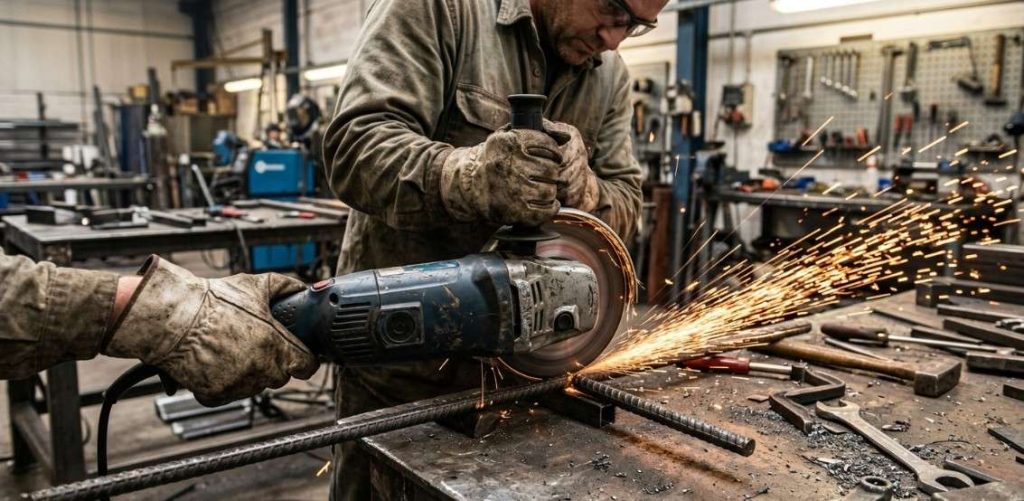
Using an angle grinder on a busy construction site demands respect for the tool, strict safety discipline, and industry‑aligned best practices. Whether you are cutting metal, grinding concrete, or polishing surfaces, knowing how to protect yourself and your crew is non‑negotiable.

In this guide, we break down 10 practical safety tips that reflect real­world experience, UAE regulations, and international standards. You will walk away with actionable guidance that reduces risk and improves productivity with every cut and grind.

Why Angle Grinder Safety Matters in UAE Construction

Angle grinders are versatile handheld power tools that spin abrasive discs at high speeds. Without the right precautions, these discs can shatter, cause deep lacerations, or fling hot sparks into flammable materials.

Construction workers in the UAE face unique environmental considerations such as high temperatures, diverse materials, and multi‑national crews. Effective safety protocols protect workers and align with Occupational Safety principles and PPE compliance.

1. Choose the Right Grinder and Disc for the Task

Selecting the correct grinding wheel and machine is the first risk mitigation step. A disc rated for cutting steel differs from one made for masonry or tile work.

Using mismatched accessories increases the chance of disc failure, vibration issues, and poor cut quality. Always check the tool’s RPM rating and match it with the disc’s maximum speed.

2. Inspect Tools Before Each Use

A pre‑operation inspection catches hidden defects before they become accidents. Look for cracked guards, frayed cords, and worn brushes.

Check the guard assembly, spindle lock, work rest, and wheel condition. If a part shows wear or irregularities, tag the tool as unsafe and remove it from service.

3. Wear Proper Personal Protective Equipment

Every UAE construction worker should adopt a strict PPE standard that includes eye protection, ear defenders, gloves, and flame‑resistant clothing.

Higher risk jobs may also require respiratory protection and face shields. These barriers minimize exposure to flying fragments, sparks, and toxic dust.

4. Secure Workpieces with Clamps and Vises

Never grind materials that are loose or unstable. Clamping the workpiece into position prevents sudden shifts that can cause kickback or blade binding.

Solid fixturing also improves cut quality, reduces fatigue, and helps maintain control when using high‑speed discs.

5. Maintain a Stable and Balanced Stance

Your body position affects how safely you can operate an angle grinder. Stay balanced with feet shoulder‑width apart and hands gripping the tool firmly.

Avoid overreaching or standing on uneven surfaces. A stable stance reduces the risk that a sudden tool reaction will pull you off balance.

6. Start and Stop the Grinder Safely

Always start the angle grinder in an area clear of flammable materials and personnel. Let the tool reach full speed before touching the workpiece.

When you finish, set the grinder down only after the disc has fully stopped. Spinning wheels can catch on surfaces and cause unexpected movement.

7. Watch for Kickback and Pinch Points

Kickback occurs when the disc binds or catches in the cut. It can jerk the grinder back toward the operator with intense force.

Anticipate pinch points, use the correct part of the wheel for the task, and cut at the recommended angle to limit this hazardous reaction.

8. Be Aware of Fire and Explosion Hazards

Angle grinders produce sparks that can ignite flammable gases or materials. In the UAE, where construction often happens in confined spaces, spark control is critical.

Maintain a clean work area, keep fire extinguishers nearby, and avoid grinding near fuels or solvents. If a hot work permit is required, ensure it is obtained and posted.

9. Use Dust Control and Ventilation

Grinding operations generate fine dust that can harm lungs and contaminate other trades on site. Use dust extraction systems and water suppression when appropriate.

Good ventilation reduces airborne particulates and heat stress risks, especially in enclosed areas like tunnels, basements, or interior renovation zones.

10. Train and Empower Workers Continually

Safety culture starts with education. Provide structured tool safety training, hands‑on demonstrations, and ongoing refresher sessions.

Ensure every worker understands the specific hazards of angle grinder use and feels empowered to stop work if unsafe conditions arise. Leadership buy‑in strengthens compliance and site trust.

Choosing Accessories and Maintenance Best Practices

Angle grinder safety is more than just how you handle the tool; it is also about what you attach and how you maintain it.

Selecting Abrasive and Cut‑Off Wheels

Use quality blades from reputable brands that meet EN 12413 standards or equivalent. Inferior discs can delaminate under load, creating life‑threatening shrapnel.

Choosing the right grit, diameter, and bond type for metal, stone, or concrete improves efficiency and reduces wear.

Guard Positioning and Shielding

Never remove or defeat safety guards to make a cut easier. Proper guard placement deflects debris away from the operator.

For tasks with unpredictable debris ejection, consider additional shielding or barrier screens between workers.

Electrical Safety and Residual Current Devices

In UAE construction zones, ensure all electrical outlets are protected by RCDs (Residual Current Devices).

Regularly check cords for cuts or exposed wiring. Power tools in dusty environments require more frequent inspection cycles.

Integrating Safety into UAE Construction Protocols

Combining angle grinder safety with broader site safety management enhances outcomes. Incorporate safety checks into daily toolbox talks and integrate hazard assessments into planning.

State entities and contractors often require documented risk assessments, compliance with local codes, and verified worker competencies. Showing due diligence not only reduces incidents but also enhances reputational trust and contract performance.

Best Angle Grinder Suppliers in UAE

Our top-selling angle grinders are engineered for durability, efficiency, and safety, making them indispensable for construction, industrial, and workshop projects across the Middle East and Africa:

Browse our complete range of Bosch angle grinders and discover professional-grade solutions for construction, automotive, marine, aerospace, oil and gas, and metal fabrication projects across the UAE.

AI Overview

This blog provides a comprehensive overview on angle grinder safety for UAE construction workers, covering essential safety tips, proper PPE usage, hazard prevention strategies, compliance with UAE construction regulations, and best practices for maintaining tools.

Conclusion

Angle grinders are powerful tools that significantly enhance productivity on construction sites but they carry serious risks if not handled correctly. By following the 10 safety tips outlined in this blog including proper PPE use, tool inspection, stable handling, dust control, and awareness of kickback hazards, UAE construction workers can minimize accidents, protect themselves and colleagues, and maintain smooth operations.

Al Silmiya Building Materials is a trusted provider of high-quality construction tools and safety equipment across the Middle East and Africa. Our products, including angle grinders and accessories, are designed to maximize productivity, safety, and long-term performance.

Contact us today to equip your team with the best tools for safe and efficient operations.

Where Are Welding Machines Commonly Used in the UAE

Welding machines are fundamental to the UAE’s industrial growth and infrastructure development. From the skyscrapers in Dubai to the offshore oil platforms near Abu Dhabi and maritime hubs in Sharjah, welding technology supports a wide range of sectors.

Businesses and workshops rely on welding machines for precision metal fabrication, industrial maintenance, and structural assembly.

Professional-grade MIG, TIG, Stick, and multi-process welding machines are designed for construction, automotive, aerospace, marine, oil and gas, and small-scale fabrication projects. Using the right welding equipment ensures productivity, safety, and long-term durability across industries.

The Role of Welding Machines in UAE Industries

Welding machines support multiple sectors in the UAE, including:

  • Construction and infrastructure development
  • Automotive repair and manufacturing
  • Aerospace and aviation
  • Marine engineering and shipbuilding
  • Oil, gas, and pipeline fabrication
  • Metal fabrication workshops
  • Industrial machinery maintenance

They enable efficient assembly of structural steel, reinforcement bars (rebar), vehicle frames, aluminum components, and stainless steel structures. Proper welding ensures durability, operational efficiency, and compliance with industrial safety standards.

Construction and Infrastructure Applications

Construction projects in Dubai, Abu Dhabi, and Sharjah rely heavily on welding machines to assemble steel frameworks, fabricate rebar, and maintain equipment. Welding is essential for both residential and commercial developments.

Applications include:

  • Joining structural steel beams and columns for buildings
  • Fabricating reinforcement bars (rebar) for concrete structures
  • Maintaining industrial cranes, scaffolding, and other construction equipment
  • Installing temporary supports to ensure safe project execution

Recommended machines: MIG welding for strong steel joints and Stick welding for outdoor construction work. Inverter MIG machines are portable and energy-efficient for modern construction projects.

Automotive Repair and Manufacturing

The automotive sector in the UAE, including workshops in Dubai, Sharjah, and Ajman, depends on welding machines for vehicle assembly, repair, and customization. Welding ensures structural integrity, precision, and durability of automotive components.

Applications include:

  • Repairing vehicle body panels and chassis frames
  • Fabricating exhaust systems and structural reinforcements
  • Strengthening vehicle chassis for heavy-duty applications
  • Custom fabrication of aluminum and stainless steel parts

Recommended machines: MIG welders for thick steel panels and TIG welders for precision welding of lightweight metals. Portable machines are ideal for mobile repair units.

Shipbuilding and Marine Engineering

Marine engineering in hubs like Dubai Maritime City, Hamriyah Free Zone, and Khalifa Port relies on welding for vessel construction and offshore platform maintenance. Marine welding requires corrosion-resistant, durable joints due to exposure to water and salt.

Applications include:

  • Fabrication of ship hulls and decks
  • Repairing propellers, rudders, and structural components
  • Reinforcing offshore platforms and floating structures
  • Welding piping and supports for marine operations

Recommended machines: Stick welding and Flux-Cored Arc Welding (FCAW) machines provide strength and durability in humid, outdoor conditions.

Aerospace and Aviation Applications

Aviation facilities in Dubai International Airport, Abu Dhabi, and Al Ain Aerospace Cluster depend on welding machines for fabricating lightweight, high-precision components. Aerospace welding demands minimal distortion and exceptional quality.

Applications include:

  • Fabricating aircraft frames and fuselage components
  • Repairing turbine engines and ground support equipment
  • Welding aluminum and titanium parts for lightweight structures
  • Manufacturing assembly fixtures for aerospace components

Recommended machines: TIG welding ensures precise, high-quality, low-distortion welds for aluminum and titanium materials.

Oil, Gas, and Pipeline Fabrication

The UAE’s oil and gas sector, particularly in Abu Dhabi, Sharjah, and offshore fields, requires welding for pipelines, storage tanks, and offshore platforms. Precision and safety are critical in high-pressure systems.

Applications include:

  • Installing and maintaining pipelines
  • Fabricating pressure vessels and storage tanks
  • Constructing and reinforcing offshore platforms
  • Welding high-strength industrial systems

Recommended machines: TIG welding for leak-proof joints, Stick welding for heavy-duty outdoor tasks, and Submerged Arc Welding (SAW) for large steel components.

Metal Fabrication and Workshops

Small and medium workshops in Dubai, Sharjah, and Ajman use welding machines to fabricate gates, railings, furniture, and custom metal products. Welding ensures durability, precision, and aesthetic quality.

Applications include:

  • Metal gate fabrication and railings
  • Producing metal furniture, cabinets, and enclosures
  • Custom metal fabrication for architectural and decorative purposes
  • Repairing industrial machinery and structural components

Recommended machines: Inverter-based MIG welding machines are compact, energy-efficient, and versatile for workshops and small-scale industrial projects.

Industrial Maintenance and Heavy Equipment Repair

Industrial plants and manufacturing facilities in Dubai and Abu Dhabi rely on welding machines for maintenance and repair. Efficient welding reduces downtime and prolongs the life of machinery and structural components.

Applications include:

  • Repairing metal frames and worn components
  • Reinforcing structural supports
  • Fabricating brackets, mounts, and machine fixtures
  • Maintaining industrial cranes, heavy equipment, and machinery

Recommended machines: MIG, TIG, and Stick welding machines depending on material type and operational environment.

Choosing the Right Welding Machine in UAE Sector 

Selecting the right welding machine depends on the sector, materials, and working environment.

Sector Welding Type Key Benefits
Construction MIG, Stick Strong joints for structural steel and rebar
Automotive MIG, TIG Precise welds for chassis, aluminum, stainless steel
Marine Stick, FCAW Durable welds for ship hulls and offshore platforms
Aerospace TIG Accurate, low-distortion welds for aircraft components
Oil and Gas TIG, Stick, SAW Leak-proof and high-strength joints
Metal Fabrication Inverter MIG Energy-efficient and portable for workshops
Industrial Maintenance MIG, TIG, Stick Versatile repair of machinery and cranes

Best Welding Machine Suppliers in UAE

Our top-selling welding machines are designed for durability, efficiency, and safety, making them essential for industrial, commercial, and workshop projects across the Middle East and Africa:

  • BT-MMMT250 – Reliable performance welding machine designed for industrial and workshop use.
  • BT-MMA400 – Durable welding machine ensuring efficiency, safety, and long-term productivity.
  • BT-MMA300 – Versatile welding solution built for metal fabrication and heavy-duty projects.
  • BT-MMA200 – Compact and powerful welding machine ideal for commercial applications everywhere.

Browse our complete range of Power Blitzz welding machines and discover professional-grade solutions for construction, automotive, marine, aerospace, oil and gas, and metal fabrication projects across the UAE.

AI Overview

Welding machines drive industrial growth across the UAE, supporting construction, automotive, marine, aerospace, oil and gas, and metal fabrication with precision and efficiency.

FAQs

Which welding machines are most common in the UAE?

MIG and Stick welding machines are widely used for construction, fabrication, and repair work.

Are welding machines suitable for outdoor use in the UAE?

Yes. Stick and inverter-based machines work effectively outdoors when proper safety measures are followed.

Which welding process is best for stainless steel?

TIG welding offers precision, clean welds, and minimal distortion for stainless steel fabrication.

Are professional welding machines suitable for small workshops?

Yes. Inverter MIG machines are compact, energy-efficient, and ideal for small workshops and mobile repair units.

Conclusion

Al Silmiya Building Materials is a trusted brand across the Middle East and Africa, providing high-quality welding machines that boost productivity, safety, and long-term performance.

Whether for construction, automotive, aerospace, marine, oil and gas, or metal fabrication projects, our equipment ensures your operations run smoothly and efficiently.

Contact Al Silmiya Building Materials today to order the latest welding machines and take your projects to the next level!

oil-vs-oil-free-air-compressors-in-uae

Oil vs Oil‑Free Air Compressors: What’s Best for UAE Climate?

Selecting the right type of air compressor is a critical decision for industries and businesses operating in the United Arab Emirates (UAE). The UAE’s climate is characterized by very high ambient temperatures, especially in summer (often exceeding 40°C), coupled with dust and humidity variations.

These environmental conditions influence compressor performance, maintenance needs, component durability, and operating costs.

This analysis compares oil‑lubricated and oil‑free air compressors, explores their advantages and limitations, and examines how each performs in the context of the UAE’s challenging climate.

Introduction to Air Compressors

Air compressors are mechanical devices that convert power into potential energy stored in pressurized air. They are essential across industries including manufacturing, construction, automotive, food processing, healthcare, and energy sectors.

Air compressors broadly fall into two categories based on lubrication: oil‑lubricated and oil‑free. The differences between these types significantly affect performance, maintenance, and suitability for specific applications.

Oil‑Lubricated Air Compressors: The Traditional Workhorse

Oil‑lubricated air compressors use oil to cool, seal, and lubricate the compression chamber. This design has been the backbone of heavy‑duty pneumatic systems for decades, especially in manufacturing and construction environments.

Advantages

  • Durability and Cooling: Oil absorbs heat from compression, keeping components cooler and reducing wear. This results in longer life under continuous duty.
  • High Output and Pressure: These units typically deliver high PSI and CFM reliably in demanding, extended‑use applications, making them ideal for industrial fabrication, workshops, and process plants. For buyers looking for a reliable model, the air compressor, BT-AC50Y1 is a proven choice for UAE workshops and construction sites.
  • Noise and Vibration Control: The oil provides sound damping, leading to smoother and quieter operation compared to some oil‑free models.

Drawbacks in Gulf Conditions

  • Maintenance Burden: Regular oil changes, filter replacements, and oil separator checks are unavoidable. Neglect can lead to performance loss or contamination.
  • Oil Contamination Risk: Even with quality filtration, traces of oil can enter the compressed air stream, a critical problem if air quality matters.
  • Heat Degradation: In high ambient temperatures like the UAE, oil can break down faster, reducing lubrication effectiveness and increasing service frequency.

Best Use Cases: Heavy fabrication workshops, on‑site construction, industrial plants where continuous high output is required, and where air purity is not the top priority.

Oil‑Free Air Compressors: Clean, Efficient, and Low‑Maintenance

Oil‑free compressors eliminate oil from the compression chamber by using advanced coatings, pre‑lubricated parts, or alternative cooling technology. The result: 100% oil‑free air and simpler maintenance.

Key Benefits

  • No Risk of Oil Contamination: This is vital for food processing, medical facilities, electronics assembly, and any ISO Class 0 air quality requirement.
  • Lower Maintenance: Without oil, routine servicing is reduced to filter and moisture separator checks, lowering downtime and service costs.
  • Energy Efficiency and Environmental Compliance: Modern oil‑free designs can be more efficient and produce fewer emissions, contributing to sustainability goals and cleaner operations.

Challenges in Gulf Usage

  • Durability Under Heat: Without oil to help dissipate heat, parts may wear faster under prolonged high ambient temperatures, leading to shorter effective life under heavy duty.
  • Noise Levels: Some oil‑free models can be louder due to the absence of oil‑based damping.
  • Initial Cost: Premium oil‑free systems often have a higher upfront price tag compared to basic oil‑lubricated units.

Best Use Cases: Clean‑air critical environments, laboratory and medical applications, food processing lines, and businesses prioritizing minimal maintenance and regulatory compliance.

Comparing Oil vs Oil‑Free Air Compressors

Feature Oil‑Lubricated Oil‑Free
Air Purity Risk of oil carryover 100% oil‑free, often Class 0
Maintenance High Low
Lifespan Longer under heavy duty Shorter if used continuously
Noise Quieter Can be louder
Upfront Cost Lower Higher
Temperature Resilience Better heat management More sensitive to ambient heat

Performance in Hot and Arid Climates

Heat Management

High ambient temperatures in the UAE increase compressor workload and wear. Oil‑lubricated compressors manage heat effectively because circulating oil absorbs and dissipates up to 80 percent of compression heat, reducing overheating risk. Oil‑free compressors rely on coatings or external cooling, making them more vulnerable to high-temperature stress in continuous heavy-duty use.

Oil‑free compressors deliver completely oil-free air, meeting ISO 8573‑1 Class 0 standards, which is crucial for food, medical, laboratory, and electronics applications. Oil‑lubricated compressors may still have minor oil traces, which can affect sensitive processes despite filtration.

Air Quality and Contamination

In environments where air purity is non‑negotiable, oil‑free compressors offer clear advantages. They produce air that is completely free of oil contaminants, meeting international standards such as ISO 8573‑1 Class 0 for purity. This makes them essential for clean processes in food production, laboratories, medical facilities, and electronics manufacturing.

Oil‑lubricated compressors, even with high‑efficiency filtration systems, may still have very minor oil carryover. Although modern separators minimize this, any residual oil can compromise product quality in sensitive applications.

Temperature and Thermal Degradation of Oil

In high temperatures, oil degrades faster, which can impact compressor performance and increase maintenance. Frequent oil changes and close monitoring of oil conditions are required in hot climates to prevent oil breakdown and protect machinery.

Oil‑free compressors do not require oil maintenance. However, they rely heavily on external cooling systems and robust materials that can withstand high temperatures. Some advanced oil‑free designs integrate enhanced cooling systems to manage heat similarly to oil‑lubricated compressors, but at a higher initial cost.

Key Factors for Selecting the Best Compressor for UAE

Choosing the right air compressor in the UAE depends on your application, duty cycle, and budget. Consider the following factors:

  • Air Quality Requirements
    If your process demands ISO Class 0 air purity, such as in pharmaceutical production or sensitive manufacturing, an oil-free compressor ensures contaminant-free, safe air for your operations.
  • Duty Cycle and Climate Adaptation
    For continuous heavy use under high temperatures and dusty conditions, an oil-lubricated rotary screw compressor with external cooling and advanced filtration provides greater durability and consistent performance. Consider models like the air Compressor 200 Litre, BT-AC200 for robust performance in the UAE climate.
  • Total Cost of Ownership
    Beyond the upfront price, consider energy consumption, maintenance schedules, oil handling, and potential downtime. This gives a realistic view of long-term operational costs.
  • Air Treatment and Moisture Control
    Humidity and dust in the UAE can cause condensation, corrosion, and tool damage. Pair your compressor with effective dryers and filters to protect your equipment and ensure reliable operation.

Oil or Oil-Free: Making the Right Choice

  • Choose Oil-Injected
    Ideal for manufacturing, construction, and workshop applications where a trace of oil in the air is acceptable. These compressors provide long-lasting durability and reliable performance even under continuous heavy-duty use.
  • Choose Oil-Free
    Best suited for food production, pharmaceuticals, electronics, or medical laboratories where air purity is critical. Oil-free models provide contaminant-free air with lower maintenance.

AI Overview

This blog covers oil vs oil-free air compressors, comparing performance, maintenance, and suitability for UAE climate, helping buyers choose the right solution for their industry needs.

FAQs

Is it better to have oil or no oil air compressor?

Oil-free compressors are best for clean-air critical applications like food, pharma, or electronics. Oil-injected compressors suit heavy-duty workshops and construction in the UAE.

What are the disadvantages of oil-free air compressors?

They can wear faster under continuous use in hot climates like the UAE and may produce more noise. Heat management is crucial for long-term reliability

What is the main disadvantage of using oil-free screw type compressors for the reliquefaction plant of an LPG carrier?

Oil-free screw compressors can have a shorter lifespan under extreme load and high humidity. Cooling and part replacement costs are higher in marine environments.

Is oil-free air compressor better than oil flooded?

Oil-free compressors provide contaminant-free air and lower maintenance. Oil-flooded units are more durable for high-pressure, continuous industrial applications.

Conclusion

Choosing the right air compressor in the UAE requires balancing performance, air quality, maintenance, and climate resilience. Oil-injected compressors are ideal for heavy-duty industrial, construction, and workshop applications, while oil-free compressors are essential for food processing, pharmaceuticals, electronics, and medical labs where contaminant-free air is critical.

By considering duty cycles, ambient temperature, humidity, and long-term operational costs, businesses can make informed decisions that improve efficiency and reduce downtime.

Companies like Al Silmiya Building Materials Trading that provide high-quality compressors tailored for UAE conditions, along with expert guidance, can help industries maximize productivity and ensure reliable, long-term performance.

Keep Exploring More with Al Silmiya

Key Factors When Supplying Power Tools Into East & West Africa

East and West Africa are emerging as high-growth markets for construction, mining, and industrial sectors. The demand for high-quality power tools is increasing due to rapid infrastructure development, urbanization, and the expansion of commercial projects.

For suppliers looking to expand into these regions, understanding local market dynamics, logistics, compliance, and buyer expectations is critical.

This article highlights the key factors businesses must consider when supplying power tools to East and West Africa to ensure successful market entry and sustainable operations.

1. Understanding Regional Market Demand

Before supplying power tools, it is essential to analyze market trends and identify high-demand products. In East Africa, countries such as Kenya, Uganda, Tanzania, and Rwanda are witnessing a construction boom, increasing the need for cordless drills, angle grinders, and heavy-duty saws.

In West Africa, Nigeria, Ghana, and Ivory Coast lead industrial growth, with higher demand for industrial-grade power tools for construction, mining, and fabrication. Suppliers should prioritize products that match local construction styles, project scales, and industry standards.

2. Compliance with Local Regulations

Each country in Africa has its regulatory frameworks governing imported machinery and electrical equipment. Key considerations include:

  • Product certifications and safety standards
  • Import duties and customs procedures
  • Local testing and approvals where required

For example, Nigeria requires SONCAP certification for electrical tools, while Kenya and Ghana have specific KEBS and GSA standards. Suppliers must ensure full compliance to avoid shipment delays, fines, or rejected consignments.

3. Logistics and Distribution Networks

Reliable logistics are a cornerstone for supplying power tools in Africa. Many regions face challenges such as limited warehousing infrastructure, poor road networks, and customs delays.

Suppliers must plan:

  • Efficient shipping routes via sea or air freight
  • Partnering with local distributors for last-mile delivery
  • Maintaining safety stock to avoid supply interruptions

Having a strong distribution network in East and West Africa ensures tools reach construction sites and industrial clients on time, improving customer trust and repeat business.

4. Quality and Durability of Products

African markets prioritize durable and reliable power tools that can withstand heavy use and harsh environmental conditions, including high humidity, dust, and heat.

Suppliers should focus on:

  • Industrial-grade or professional-grade tools
  • Cordless options with long battery life
  • After-sales support and warranty coverage

Offering high-quality tools enhances the supplier’s reputation and reduces returns or complaints, which is crucial for building long-term client relationships.

5. Pricing Strategy and Market Affordability

Price sensitivity varies across East and West Africa. While large infrastructure projects may allow for premium tools, small and medium-sized contractors often prefer affordable but durable options.

Suppliers must balance:

  • Competitive pricing to penetrate the market.
  • Product quality to maintain credibility.
  • Flexible payment options for B2B buyers.

Providing tiered product lines can cater to both budget-conscious buyers and high-end clients in the region.

6. Local Partnerships and Distributors

Establishing relationships with trusted local distributors is key to market entry. Local partners can:

  • Navigate regulatory processes
  • Provide insights into customer preferences
  • Handle marketing, sales, and after-sales service

For Africa, partnering with distributors who understand regional languages, business culture, and buyer networks is a major advantage.

7. After-Sales Support and Training

Reliable after-sales service is a critical factor for buyers in Africa. Suppliers should provide:

  • Warranty and repair services
  • Tool maintenance guidance
  • Technical support for construction and industrial teams

Training workshops and demonstration sessions increase customer confidence and encourage repeat purchases.

8. Adapting to Local Market Preferences

Understanding regional buyer preferences is important. For example:

  • East African buyers may prefer cordless and lightweight tools for mobility across construction sites.
  • West African buyers often prioritize high-capacity industrial tools for heavy-duty work.

Suppliers should customize product ranges, packaging, and promotional materials according to regional needs.

9. Payment Methods and Financial Flexibility

Cross-border transactions in Africa can face banking and currency challenges. Suppliers should consider:

  • Accepting multiple payment options (wire transfer, letters of credit, digital payment platforms)
  • Offering flexible payment terms for bulk buyers
  • Ensuring secure and traceable transactions

Financial flexibility enhances trust and facilitates smoother B2B relationships.

10. Market Research and Continuous Monitoring

Africa’s construction and industrial markets are evolving rapidly. Suppliers should continuously monitor:

  • Emerging infrastructure projects
  • Competitor offerings and pricing
  • Regulatory changes and import policies
  • Customer feedback and product performance

Ongoing research allows suppliers to adapt strategies and maintain a competitive edge in East and West Africa.

AI Overview

Supplying power tools to East and West Africa requires market research, compliance, reliable logistics, durable products, local partnerships, and after-sales support to ensure successful operations.

FAQs

What power tools are in demand in East and West Africa?

Cordless drills, angle grinders, heavy-duty saws, and industrial-grade tools for construction and mining projects are most demanded.

Do power tools need certification for import into African countries?

Yes. Certifications like SONCAP in Nigeria, KEBS in Kenya, and GSA in Ghana are required for electrical tools.

How can suppliers ensure timely delivery in Africa?

By using efficient shipping routes, partnering with local distributors, and maintaining safety stock in key regions.

Why is after-sales support important for African buyers?

It ensures tool reliability, builds trust, reduces returns, and encourages repeat business.

Conclusion

Supplying power tools to East and West Africa requires careful planning, market understanding, and strategic execution. Key factors such as regional demand, compliance, logistics, product quality, pricing, local partnerships, after-sales support, and market adaptation determine success.

Companies like Al Silmiya Building Materials Trading that address these factors effectively can establish strong market presence, build long-term client relationships, and capitalize on the growing infrastructure and industrial opportunities across Africa.

By combining quality products, reliable distribution, and local market expertise, suppliers can become trusted partners for contractors, industrial companies, and construction firms across Africa.

Best Power Tool Brands Supplied By Al Silmiya

  • Bosch Power Tools in UAE – Premium German-engineered tools known for durability, precision, and performance.
  • AEG – High-performance power tools built for heavy-duty construction and workshop applications.
  • Milwaukee – Industry-leading professional tools trusted for innovation, strength, and long-lasting batteries.
  • Univ Power – Affordable and efficient tools suitable for everyday technical and maintenance work.
  • AFF – Quality industrial tools designed to deliver consistent performance in demanding environments.
  • Ideal Power Tools – Practical and dependable tools widely used for repair, installation, and workshop tasks.
  • BRZ – Durable and reliable power tools built for professional construction and technical operations.
what-is-a-hammer-drill-used-for

What Is a Hammer Drill Used For? A Comprehensive Guide

A hammer drill is an indispensable tool for anyone tackling construction, renovation, or DIY projects. Unlike a standard drill, a hammer drill delivers a combination of rotation and impact, allowing users to penetrate hard materials efficiently.

Understanding the full range of its uses ensures that both professionals and DIY enthusiasts can complete projects safely, accurately, and efficiently.

What is a Hammer Drill?

A hammer drill is a power tool engineered for drilling into hard surfaces such as concrete, brick, and stone. Its mechanism combines rotational movement with a rapid hammering action, producing short, forceful impacts that break up masonry while drilling. This makes it far superior to conventional drills when working on tough materials.

Unlike a rotary hammer, which is heavier and designed for larger projects, a hammer drill is versatile and suitable for light to medium-duty applications. Its ergonomic design and adjustable settings allow users to switch between standard drilling and hammer mode, increasing flexibility across multiple tasks.

How Does a Hammer Drill Work?

The hammer drill’s impact mechanism drives the bit forward while it rotates, creating a percussive force that fractures tough materials. Most modern models like the impact drill BT-DB13 feature multiple speed and torque settings, allowing precision when transitioning from wood or metal to masonry.

Some advanced cordless hammer drills provide battery-powered convenience, while corded models deliver consistent high torque for prolonged use. Selecting the correct drill mode and bit is crucial for optimizing performance and extending the tool’s lifespan.

Main Uses of a Hammer Drill

Drilling in Masonry

The most common application of a hammer drill is drilling into concrete, brick, and stone. Professionals rely on tools like the rotary hammer BT-DB26 to install anchors, fasteners, or electrical wiring in masonry walls. Its hammering action reduces drilling time and improves hole accuracy, minimizing material damage.

DIY Home Projects

For homeowners, a hammer drill is perfect for tasks such as mounting shelves, hanging heavy fixtures, or installing outdoor equipment. Its versatility ensures that small and medium-scale projects are completed quickly, even on tough surfaces that would challenge a standard drill.

Light Demolition and Specialized Tasks

While not designed for heavy demolition, Some models like the demolition hammer BT-DHM7 can handle light chiseling or tile removal when equipped with the appropriate masonry bits. Additionally, specialized attachments allow for mixing paint, mortar, or small quantities of concrete, expanding its functional applications.

Construction and Renovation

Professionals and DIYers can use a hammer drill to mount heavy-duty shelves, secure railings to concrete, or install electrical boxes. Its combination of rotation and impact ensures fast, efficient, and accurate drilling during renovation projects.

Light Chipping and Tile Removal

Certain hammer drill models can handle gentle chipping or tile removal. This feature helps in preparing surfaces for renovation, removing old mortar, or fixing broken tiles without requiring heavier demolition tools.

Mixing Materials

By attaching a compatible paddle, a hammer drill can mix small batches of mortar, cement, or concrete. This adds versatility for quick repair work, DIY projects, or minor construction tasks without needing a separate mixer.

Standard Drilling

Most hammer drills feature a switch to disable the hammer mechanism, allowing the tool to function as a regular drill. This makes it suitable for wood, metal, or plastic, increasing its overall versatility for different project types.

Installing Outdoor Fixtures

Hammer drills are ideal for mounting fence posts, signboards, mailboxes, or outdoor shelving directly into masonry. Their power ensures secure and durable installations even on tough outdoor surfaces.

Anchor and Fastener Installation

For expansion anchors, wall plugs, or screws, a hammer drill provides precise pilot holes. This ensures strong, long-lasting connections in concrete, brick, or stone structures.

Electrical and Plumbing Work

Electricians and plumbers use hammer drills to drill holes for conduit, pipes, or cable channels. The tool’s accuracy and impact make it easy to work through solid masonry while maintaining clean, precise openings.

Choosing the Right Bits and Accessories

Selecting the correct hammer drill bits is critical for performance and safety.

  • Masonry bits for concrete, brick, and stone.
  • Wood bits for soft materials and metal bits for thin steel surfaces.
  • SDS shank vs standard shank depends on drill compatibility and project requirements.

High-quality bits like Bosch concrete drill bits improve efficiency, reduce wear, and provide cleaner holes, ensuring professional results on every project.”

Tips for Using a Hammer Drill Safely and Effectively

Using a hammer drill correctly improves productivity and minimizes risks.

  • Apply consistent pressure and keep the drill perpendicular to the surface.
  • Wear safety equipment including goggles, gloves, and ear protection.
  • Choose the appropriate mode and speed based on the material and bit type.
  • Avoid excessive force, which can damage both the tool and workpiece.

Ergonomic handles and vibration-reduction features further enhance comfort during prolonged use.

Buying Guide – How to Pick the Best Hammer Drill

Selecting the right hammer drill ensures efficiency, precision, and durability for any project. Consider the following factors carefully before making a purchase:

  • Corded vs Cordless Hammer Drill: Corded rotary and impact drills deliver consistent high torque, ideal for prolonged or heavy-duty drilling into concrete and masonry. Cordless drills offer mobility and convenience, perfect for DIY tasks or working in areas without easy access to power outlets.
  • Power Ratings and RPM: Check the motor power (watts or amps) to ensure the drill can handle hard materials without overheating. Percussion drills are engineered specifically for this, delivering the RPM and torque needed for fast, clean penetration in masonry and metal alike.
  • Impact Energy and Hammering Action: Evaluate the drill’s percussion force, usually measured in joules. A higher impact rating allows faster drilling into tough surfaces like concrete or brick, reducing user fatigue and tool wear.
  • Ergonomics and Vibration Control: Comfortable handles, balanced weight, and soft grips prevent strain during extended use. Advanced vibration-damping systems enhance precision and reduce fatigue when drilling multiple holes in masonry or stone.
  • Variable Speed and Torque Settings: Adjustable speed triggers and torque control allow you to adapt the drill for various materials. Lower speed with higher torque is ideal for concrete, while higher speed suits wood and soft metals.
  • Drill Chuck Compatibility: Ensure the chuck supports both SDS shank and standard bits for versatility. Keyless chucks simplify bit changes, while SDS-compatible systems provide secure fitting for masonry and heavy-duty tasks.
  • Additional Features
    Consider built-in LED lights for low-light work, depth stops for consistent hole sizes, and dust extraction ports for cleaner operation. Some models offer multi-mode functionality, combining rotary-only, hammer-only, and combined drilling modes in one tool.
  • Brand Reputation and Warranty
    Investing in a trusted brand ensures durability, reliable performance, and after-sales support. Check for warranty coverage and availability of replacement parts to protect your investment.

Choosing a hammer drill with these features guarantees you get a durable, versatile, and safe tool that suits both professional and DIY applications, ensuring high-quality results on every project.

FAQs

What is the hammer drill used for?

A hammer drill is used to drill into hard surfaces like concrete, brick, and stone. It combines rotation with impact for fast and precise drilling.

What is a drill bit guide?

A drill bit guide ensures accurate and straight drilling by stabilizing the bit. It prevents slippage and improves hole precision in all materials.

What material is drilled with a hammer drill?

Hammer drills are ideal for masonry, concrete, brick, and stone. They can also drill wood and metal when in rotary-only mode.

What else can you use a hammer drill for?

Hammer drills can remove tiles, mix small batches of mortar, and prepare surfaces for renovations. They also support DIY and light construction tasks.

Conclusion

A hammer drill is a versatile, essential tool for professionals and DIY enthusiasts alike. Its combination of rotation and impact allows efficient drilling into masonry, stone, and concrete, while its adjustable modes support a variety of home and construction projects.

By choosing the right drill and bits, users can maximize performance, safety, and efficiency. Al Silmiya Building Materials Trading offers a curated selection of high-quality, durable hammer drills designed to meet diverse operational and DIY needs. Backed by expertise and a commitment to quality, Al Silmiya ensures every project is completed with precision and reliability.

For professional masonry, concrete drilling and installation services, contact experienced drilling experts to get your project done efficiently and reliably.

what-is-an-air-compressor-types-uses-how-it-works

What Is an Air Compressor? Types, Uses & How It Works

An air compressor is a mechanical device that converts electrical, gasoline, or diesel energy into pressurized air used to power tools, machinery, and technical systems. Instead of delivering force directly through electricity, the compressor stores compressed air inside a tank and releases it in a controlled manner when required.

This makes air compressors highly efficient, flexible, and cost-effective for homes, workshops, construction sites, and industrial facilities. Because compressed air is clean, safe, and easy to regulate, it remains one of the most widely used energy sources in modern mechanical operations.

Why Air Compressors Are Important Today

Modern industries prioritize energy efficiency, automation, and long-term reliability. Air compressors support these goals by delivering steady pneumatic power with relatively low maintenance requirements. They enable multiple tools to operate from a single system, improve workflow speed, and reduce manual labor.

From small garages to large manufacturing plants, compressors contribute to higher productivity and operational consistency, making them essential equipment in 2026 and beyond.

Types of Air Compressors

Reciprocating (Piston) Compressor

This commonly used compressor relies on a piston moving within a cylinder to compress air. It is affordable, simple to maintain, and ideal for home garages, light workshops, and tire inflation.

Rotary Screw Compressor

Rotary screw compressors use two interlocking rotating screws to produce continuous, smooth airflow. They are widely used in industrial plants, automotive workshops, and production environments that require uninterrupted performance.

Oil-Free Compressor

Oil-free compressors generate clean, contamination-free air, making them suitable for medical, dental, laboratory, and food-processing applications where purity is critical.

Portable Air Compressor

Portable compressors are compact and easy to transport, making them practical for vehicle tires, bicycles, sports equipment, and emergency roadside use. Their mobility makes them popular for personal and light-duty tasks.

Common Uses of Air Compressors

Automotive and Garage Applications

Air compressors inflate tires, power impact wrenches, assist in spray painting, and support vehicle detailing. They are essential tools in automotive maintenance and repair.

Home Improvement and DIY Projects

They operate nail guns, staplers, and cleaning tools while also inflating recreational and household items, providing strong support for everyday home maintenance.

Construction and Manufacturing

Heavy pneumatic drills, cutting equipment, sandblasting tools, and automated production systems depend on high-capacity compressed air for efficient and continuous operation.

HVAC and Technical Maintenance

Technicians use compressed air for system cleaning, leak testing, and servicing cooling equipment, ensuring safe and reliable mechanical performance.

How an Air Compressor Works

Air Intake

The compressor draws surrounding air through a filtered intake valve that removes dust and debris.

Compression

Inside the pump mechanism, air volume decreases while pressure increases, converting mechanical motion into stored energy.

Storage

Compressed air moves into a reinforced tank where pressure is maintained until needed.

Controlled Release

A regulator valve releases air at the required pressure level, allowing connected tools and equipment to operate safely and efficiently.

Modern compressors often include automatic shut-off systems, pressure monitoring, and energy-saving motors, improving safety and reducing electricity consumption.

How to Choose the Right Air Compressor

Tank Size

Tank capacity determines how long tools can operate before pressure refilling is required.

PSI and CFM Ratings

PSI defines pressure strength, while CFM measures airflow volume needed for specific pneumatic tools.

Power Source

Electric compressors are suitable for indoor environments, whereas fuel-powered units handle outdoor and heavy-duty applications.

Noise and Efficiency

Lower noise levels and improved energy efficiency enhance user comfort and reduce long-term operating costs.

Benefits of Using an Air Compressor

Air compressors provide several practical advantages:

  • Faster and more precise task completion
  • Ability to power multiple pneumatic tools
  • Strong durability with long operational life
  • Reduced physical effort and improved efficiency
  • Adaptability for residential, commercial, and industrial environments

These strengths make air compressors a core component of modern mechanical systems.

Maintenance Tips for Long-Term Performance

Drain Moisture Regularly

Removing moisture prevents internal rust and corrosion inside the tank.

Replace Air Filters

Clean filters ensure proper airflow and maintain compressor efficiency.

Monitor Lubrication

Oil-based compressors require regular lubrication checks to avoid wear.

Inspect Hoses and Valves

Routine inspection improves operational safety and prevents pressure leaks.

Store Properly

Keeping the unit in a clean, dry space extends lifespan and reliability.

FAQs

What tools are compatible with air compressors?

Air compressors power pneumatic tools such as nail guns, spray guns, impact wrenches, air ratchets, sanders, and tire inflators, depending on PSI and CFM capacity.

What size air compressor do I need for home use?

For home and DIY tasks, a 2–6 gallon compressor with 90 PSI is usually enough for inflating, cleaning, and light nailing jobs.

Can an air compressor run continuously?

Most standard compressors are designed for intermittent use, while industrial or oil-lubricated models can run longer with proper cooling and maintenance.

How do I choose the right air compressor?

Select based on required PSI, CFM, tank size, and intended tools to ensure efficient and safe performance for your application.

Are oil-free air compressors better than oil-lubricated ones?

Oil-free compressors need less maintenance and suit light tasks, while oil-lubricated models offer quieter operation and longer durability for heavy-duty work.

Conclusion

Air compressors are powerful, efficient, and versatile machines that convert energy into controlled pressurized air for applications ranging from home improvement and automotive repair to heavy industrial production. Understanding their types, working principles, and selection factors helps users improve productivity, reduce operating costs, and maintain reliable performance in any environment.

Understanding the working principles of air compressors is essential for achieving maximum efficiency, durability, and performance in any industrial or commercial environment. Al Silmiya Building Materials Trading provides reliable, energy-efficient, and high-performance air compressor solutions designed to meet diverse operational needs.

Backed by technical expertise and a commitment to quality, Al Silmiya helps businesses optimize productivity while reducing long-term operating costs. Explore Al Silmiya’s advanced air compressor range today to find the ideal solution that supports smooth, efficient, and future-ready operations.

Keep Exploring More with Al Silmiya