



















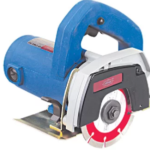
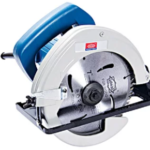


Industrial saws are essential tools for professional workshops, fabrication units, and construction sites. Choosing the right saw not only ensures precise cuts but also improves efficiency, safety, and material longevity.
In this guide, we explore the different types of saws, their applications, and how to select the right one for industrial use.
Understanding Industrial Saws
Industrial saws are specifically designed to handle heavy-duty tasks, cutting through metal, wood, plastic, and composite materials. They vary in design, blade type, power source, and application. Professionals in fabrication, construction, and manufacturing rely on these saws to deliver accurate cuts and consistent results.
Selecting the correct saw requires understanding the material type, cut precision, and the specific industrial task. Using the wrong saw can result in material wastage, reduced productivity, and safety hazards.
Circular Saws: Precision and Speed
Circular saws are among the most widely used industrial saws. These saws feature a rotating toothed blade powered by an electric or hydraulic motor. Circular saws are ideal for straight cuts in metal sheets, timber, and composite boards.
For example, in steel fabrication, a high-speed circular saw with carbide-tipped blades ensures clean, burr-free cuts. In construction, they are commonly used to cut wooden beams, panels, and aluminum sheets. Professionals favor circular saws for their balance of speed, accuracy, and versatility.
For efficient and precise cutting, explore the AEG KS 66-2 Circular Saw 66mm, ideal for professional workshops and fabrication units.
Band Saws: Versatility for Straight and Curved Cuts
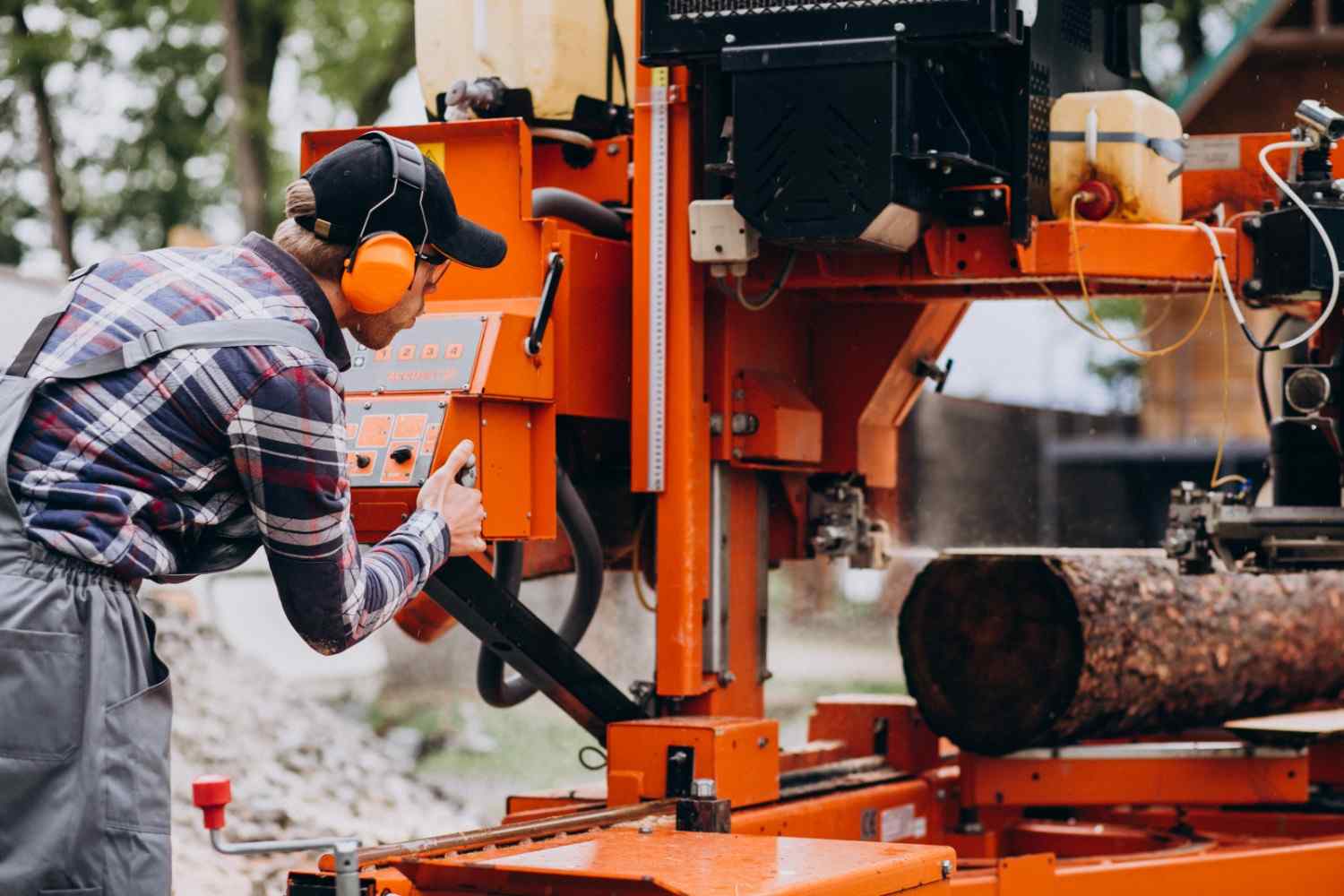
Band saws use a continuous looped blade to cut materials, providing unmatched flexibility for straight and curved cuts. Horizontal band saws are commonly used for metal cutting in workshops, while vertical band saws excel in precision tasks.
In an industrial fabrication setting, band saw machines can handle cutting steel pipes, bars, and structural profiles. Woodworking industries rely on vertical band saws for intricate designs, ensuring smooth curves without damaging the material. Their adaptability makes them indispensable for workshops handling diverse materials.
Reciprocating Saws: Demolition and Heavy-Duty Tasks
Reciprocating saws operate with a push-and-pull blade movement and are renowned for demolition, rough cutting, and material removal. They are highly portable and ideal for construction and renovation projects.
For instance, electricians and plumbers use industrial reciprocating saws to cut through pipes, metal conduits, and wooden beams quickly. Their ability to work in tight spaces and access hard-to-reach areas makes them a practical choice for professionals working on complex industrial projects.
Cold Saws: Clean and Burr-Free Metal Cutting
Cold saws are designed for cutting metal with minimal heat generation, maintaining structural integrity. These saws use a toothed circular blade and produce precise, burr-free cuts, which is crucial for manufacturing components where accuracy matters.
In automotive fabrication, cold cutting saws ensure uniform metal profiles, reducing material waste. They are preferred over abrasive saws when high-precision cuts are required, as they prevent overheating and distortion of the metal.
Chop Saws and Cut-Off Saws: Efficient Angle and Crosscuts
Chop saws and cut-off saws are stationary tools designed for quick and accurate angle or crosscuts. They are commonly used in metal fabrication and construction.
Steelworkers use cut-off saws to trim rods, tubes, and bars at precise angles, ensuring accurate fitting in structural projects. Their abrasive blades make them ideal for cutting hard metals such as stainless steel or cast iron. Explore our collection of Bosch Electric Saws for durable, high-performance solutions suitable for heavy-duty cutting tasks in industrial settings.
Jigsaws: Intricate and Curved Cutting Applications
Jigsaws are handheld saws with a narrow, reciprocating blade, perfect for intricate or curved cuts. While less common in heavy industry, they are essential in detailed fabrication and prototype development.
For example, industrial jigsaws allow metalworkers and woodworkers to cut complex patterns in thin sheets, maintaining a clean finish. Professionals can enhance precision using the Power Blitz Jig Saw Machine 400W BT-JSB65 for reliable performance.
Panel and Tile Saws: Specialized Large Material Cutting
Panel saws and tile saws are designed for cutting large sheets of wood, metal, or stone with precision. They are widely used in manufacturing, construction, and interior fit-outs.
Stone fabricators rely on wet tile saws to cut ceramic tiles, granite, and marble with minimal dust and smooth edges. Wood and metal workshops benefit from panel saw machines for cutting large sheets to exact dimensions efficiently.
Industrial Applications of Different Saws
Understanding the practical applications of industrial saws helps professionals select the right tool for their workshop, fabrication, or construction needs.
Metal Fabrication:
- Cold saws and band saws are widely used to cut steel bars, rods, and structural profiles.
- Chop saws and cut-off saws efficiently trim stainless steel and aluminum sheets for automotive, aerospace, and machinery components.
Construction and Renovation:
- Circular saws and reciprocating saws are ideal for cutting timber, plywood, and metal pipes on-site.
- Reciprocating saws excel in demolition projects, quickly removing old materials.
Woodworking and Cabinetry:
- Band saws and jigsaws allow precise curved cuts in furniture, cabinetry, and decorative panels.
- Panel saws cut large wooden sheets into standard sizes for manufacturing.
Stone, Tile, and Ceramic Work:
- Tile saws are specifically designed for cutting ceramic, granite, and marble with smooth edges.
- Wet saws prevent overheating and minimize dust while maintaining clean cuts.
Prototyping and Detailed Work:
- Jigsaws and vertical band saws provide flexibility for intricate designs in metal, wood, and composite sheets.
How to Choose the Right Industrial Saw
Selecting the appropriate saw requires a combination of experience and technical knowledge. Consider the following factors:
- Material Type: Metals, wood, plastics, and composites demand different blade types and saw designs.
- Cutting Precision: Cold saws and band saws offer high precision, while reciprocating saws are suitable for rough cuts.
- Workpiece Size: Large panels require panel saws, while small rods or pipes may suit chop saws.
- Power Requirements: Industrial saws vary from portable electric models to stationary hydraulic machines.
- Safety Features: Guarding systems, overload protection, and ergonomic design are essential in industrial environments.
This blog explores different types of saws and their industrial applications, guiding professionals in metal fabrication, construction, woodworking, and precise cutting techniques for optimal efficiency.
FAQs
What is the best saw for cutting stainless steel?
Cold saws and cut-off saws provide precise, burr-free cuts for stainless steel. They prevent overheating and maintain material integrity.
Can a band saw cut curved metal pieces?
Yes, vertical band saws excel in cutting curves and intricate shapes in metal, wood, and plastic. They ensure smooth and accurate edges.
Are reciprocating saws suitable for industrial use?
Reciprocating saws are ideal for demolition, renovation, and quick material removal in industrial settings. They work well in tight spaces.
How do I maintain industrial saws for long-term use?
Regular blade inspection, cleaning, and lubrication ensure industrial saws stay accurate and durable. Proper maintenance prevents breakdowns.
Conclusion
Industrial saws are essential tools for metal fabrication, construction, woodworking, and manufacturing industries. Understanding the different types of saws and their specific applications allows professionals to work efficiently, maintain precision, and ensure safety on every project. Choosing the right saw depends on factors such as material type, cutting precision, workpiece size, and power requirements.
For reliable industrial tools, construction equipment, and expert guidance across the Middle East and Africa, trust Al Silmiya Building Materials Trading L.L.C. to provide high-quality products, practical recommendations, and dependable solutions tailored to your workshop and industrial needs.
Contact our technical experts today to get professional advice and ensure your projects run smoothly.
Explore More Expert Insights
Explore premium Bosch, Milwaukee, Univ Power, AEG, and Ideal power tools and accessories sourced from trusted dealers for your next project.
- Hammer Drill vs Rotary Hammer: Which One Fits Your Needs: Choosing the Right Drill for Precision and Power.
- MIG vs TIG vs ARC Welding: Which One Should You Choose?: Compare MIG, TIG, and ARC welding methods to choose the right process for precision and project efficiency.
- Angle Grinder Safety Tips: How To Avoid Workplace Injuries: Essential angle grinder safety tips to prevent workplace injuries.
- How to Pick the Perfect Industrial Air Compressor: A simple guide to choosing the right air compressor.