










Purchasing a welding machine represents a significant investment for professionals and hobbyists alike in the UAE’s thriving industrial sector. The diverse range of welding applications, from construction projects to automotive repairs, demands careful consideration of various factors before making your selection.
Understanding Your Welding Requirements
The first step in selecting the right welding machine involves identifying your specific welding needs. Different projects require different welding processes, and each process demands specific machine capabilities.
MIG welding suits beginners and general fabrication work, while TIG welding offers precision for thin materials and critical applications. Arc welding provides versatility for heavy-duty construction projects commonly found across the UAE’s infrastructure development.
Power Requirements and Electrical Considerations
Power specifications form the backbone of welding machine performance. The amperage rating determines the maximum welding current the machine can produce, directly affecting the thickness of materials you can weld effectively.
Most residential and light commercial applications require machines with 200-250 amp capacity, while heavy industrial work may demand 300+ amp machines. Voltage requirements must match your available electrical supply. Single-phase machines typically operate on 220V power, suitable for most workshops and garages.
Three-phase machines require a 380V power supply, common in industrial settings but less accessible in residential areas. Verify your electrical infrastructure can support your chosen welding machine before purchase.
Machine Type and Technology
Traditional transformer-based welding machines offer reliability and simplicity but tend to be heavier and less efficient. These machines work well for basic welding tasks and provide excellent performance in demanding environments.
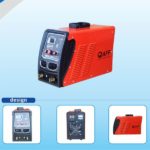
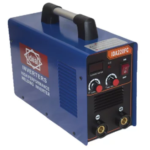
Inverter welding machines represent the latest technology, offering superior performance in a compact package. These machines provide better arc stability, reduced spatter, and enhanced control over welding parameters. The lightweight design makes them highly portable, ideal for mobile welding services common in the UAE’s construction industry.
Build Quality and Durability
The construction quality of your welding machine directly impacts its longevity and performance reliability. Look for machines with robust metal housing that can withstand workshop environments and occasional impacts.
Quality internal components, including transformers, circuit boards, and cooling systems, ensure consistent performance over time. Cooling systems play a crucial role in machine durability. Fan-cooled machines suit intermittent welding applications, while liquid-cooled systems handle continuous heavy-duty operations.
The duty cycle rating indicates how long the machine can operate at maximum output before requiring cooling time. Professional applications typically require machines with 60% or higher duty cycles.
Safety Features and Compliance
Modern welding machines incorporate various safety features that protect both the operator and the equipment. Thermal overload protection prevents damage from excessive heat buildup, while voltage fluctuation protection guards against electrical variations common in some areas. Ground fault circuit interrupters (GFCI) provide additional electrical safety.
Certification standards ensure your welding machine meets safety and performance requirements. Look for machines certified by recognized organizations such as CE, UL, or local UAE standards. These certifications indicate the machine has undergone rigorous testing and meets established safety protocols.
Explore More Expert Insights
Discover top-quality Bosch, Milwaukee, Univ Power, AEG, and Ideal power tools and accessories from leading dealers for your next project.
- Common Concrete Vibration Mistakes and How to Avoid – Avoid Concrete Vibration Mistakes for Strong, and Lasting Results
- Different Types of Angle Grinder Machine and Their Uses – Different Angle Grinder Machines and Practical Industrial Uses
- How to Pick the Perfect Industrial Air Compressor – Choosing the Right Industrial Air Compressor Made Easy
- Difference Between AC and DC Generator – AC vs DC Generators: Key Differences, Uses, and Benefits
- Uni Power vs Other Power Brands: Which Is Best for You? – Discover Which Delivers the Best Performance for You