











Every successful construction project whether a small residential build or a large-scale commercial development depends on one non-negotiable foundation: having the right tools on site.
Essential construction tools are not just equipment; they are the backbone of quality, safety, and efficiency at every stage of work.
From digging foundations to finishing surfaces, the right instruments reduce errors, protect workers, speed up timelines, and ultimately determine the outcome of the project.
This comprehensive guide covers every category of essential construction tools you need to know — written to help contractors, site managers, and project owners make informed decisions.
What Are Construction Tools?
Construction tools are specialised instruments and equipment used by workers to carry out tasks during a building project. They cover everything from measuring and cutting to lifting, mixing, and finishing.
Each tool is designed for a specific function, material, or stage of work — which is why choosing the right one matters as much as having it on site.
These tools are essential for every trade involved in construction, including carpentry, masonry, plumbing, electrical, and steelwork. Without them, tasks that take minutes become hours, precision becomes guesswork, and the risk of injury increases significantly.
At their core, construction tools serve three critical purposes on any active site:
- Efficiency — They help workers complete tasks faster and with less physical effort, increasing output across every phase of the project.
- Precision — They deliver accurate, consistent results that reduce costly rework, material waste, and structural errors.
- Safety — They eliminate the need for improvised methods and reduce the physical strain that leads to workplace injuries.
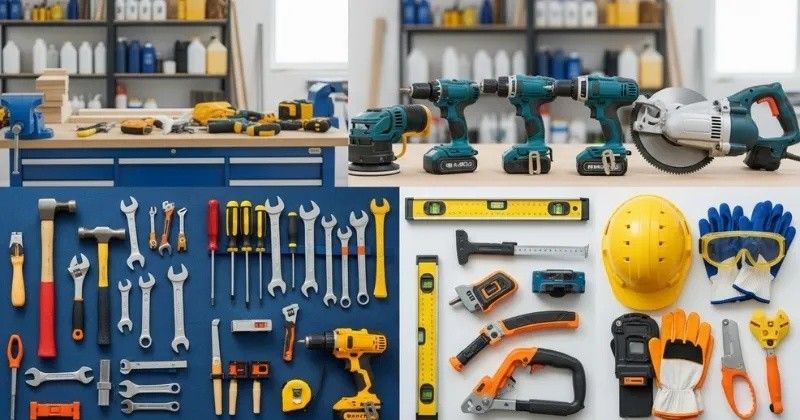
Construction tools are broadly grouped by function: hand tools, power tools, measuring tools, concrete and masonry tools, lifting and moving equipment, cutting tools, and safety equipment.
Understanding each category and when to use each type is what separates a well-managed site from one that constantly battles delays and quality issues.
Hand Tools
Hand tools are the foundation of any construction toolkit. They are portable, easy to use, and essential for precision work that power tools cannot always replicate. Every worker on site should have access to the following:
- Hammer — For driving nails, assembling frames, and light demolition work. A claw hammer covers most general tasks, while a sledgehammer handles heavy breaking.
- Screwdriver Set — Flathead and Phillips in multiple sizes for fastening across all stages of work.
- Wrench and Spanner Set — For tightening and loosening nuts, bolts, and pipe fittings. An adjustable wrench covers a wide range of sizes.
- Pliers — Needle-nose, slip-joint, and wire-cutting pliers for gripping, bending, and cutting wires or pipes.
- Chisel — For carving wood, shaping masonry, and cutting through blocks or stone with precision.
- Utility Knife — A retractable blade for cutting insulation, drywall, roofing felt, and sheet materials cleanly and safely.
Investing in professional-grade hand tools pays off in durability and performance across long projects.
Power Tools
Power tools bring speed and efficiency to tasks that would take far longer manually. They are essential on any modern construction site for repetitive and high-intensity work.
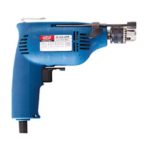
- Power Drill — For drilling into concrete, timber, and steel, and driving screws. One of the most used tools on any active site.
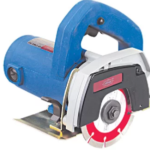
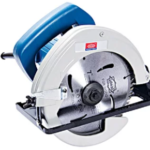
- Circular Saw — For fast, straight cuts in timber, plywood, and sheet materials.
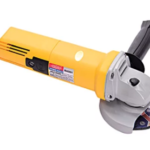
- Angle Grinder — For cutting, grinding, and polishing metal, stone, and masonry surfaces.
- Reciprocating Saw — For demolition cutting through walls, pipes, and tight spaces where other saws cannot reach.
- Nail Gun — For driving nails quickly and consistently during framing and carpentry work.
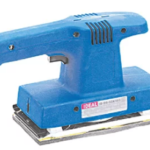
- Electric Sander — For smoothing surfaces before painting, tiling, or finishing.
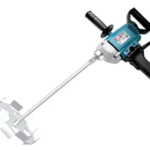
- Power Mixer — For mixing cement, mortar, and epoxy consistently on site.
All power tools require proper training and personal protective equipment (PPE) before operation.
Measuring and Layout Tools
Accurate measurement is where every successful project begins. A single error at this stage leads to rework, material waste, and delays further down the line.
- Tape Measure — The most essential measuring tool on site, used at every stage from layout to installation.
- Spirit Level — For checking that surfaces, walls, and fixtures are perfectly horizontal or vertical.
- Laser Level — Projects accurate level lines across long distances, ideal for flooring, ceilings, and façade work.
- Plumb Bob and Chalk Line — For marking straight vertical and horizontal reference lines across large surfaces.
- Try Square or Speed Square — For ensuring right angles when marking cuts and setting out framing.
- Theodolite or Total Station — For precise angle and distance measurement during site surveying and setting out on larger projects.
Calibrate all measuring tools regularly to maintain accuracy throughout every phase of work.
Concrete and Masonry Tools
Foundations, walls, and structural slabs all rely on the right concrete and masonry tools. These instruments handle cement, bricks, blocks, and plaster throughout the structural phase of any project.
- Trowel — For spreading, shaping, and smoothing mortar and plaster. Pointed trowels are used for brickwork; flat finishing trowels for surface work.
- Concrete Mixer — For blending cement, sand, aggregate, and water consistently. Reduces mix quality errors compared to manual preparation.
- Concrete Float and Bull Float — For levelling and smoothing freshly poured concrete slabs before they set.
- Mason’s Hammer — For splitting and shaping bricks, blocks, and stone during brickwork and masonry tasks.
- Joint Raker — For cleaning and finishing mortar joints between bricks, contributing to the final appearance of brickwork.
- Rebar Cutter and Bender — For shaping steel reinforcement bars to exact dimensions before concrete is poured.
Lifting and Moving Equipment
Moving heavy materials manually is one of the leading causes of injury on construction sites. The right lifting and moving tools protect workers and keep the workflow running efficiently.
- Wheelbarrow — For moving concrete, sand, gravel, and rubble quickly around the site.
- Hoist and Chain Pulley — For lifting heavy materials vertically to upper floors and elevated platforms.
- Crane (Mobile or Tower) — For placing large structural elements such as steel beams, precast panels, and heavy prefabricated units.
- Forklift and Telehandler — For transporting pallets and bulk materials efficiently across flat and uneven site terrain.
- Scaffolding Systems — For providing safe, stable working platforms at height for bricklaying, rendering, and finishing trades.
All lifting equipment must carry a valid load rating and inspected in line with safety regulations.
Cutting Tools
Cutting is required at every phase of construction — from raw material preparation to final fitting.
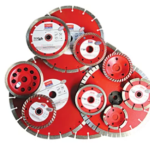
The right cutting tool depends on the material type and the level of finish required.Bosch Power tools offers a wide range of professional cutting solutions trusted across construction sites in the UAE and beyond.
- Hacksaw — For manual cutting of metal pipes, conduit, and plastic sections.
- Pipe Cutter — For producing clean, burr-free cuts on copper, steel, and plastic pipes without damaging the edges.
- Tile Cutter — For scoring and snapping ceramic and porcelain tiles accurately to minimise waste.
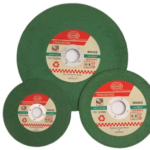
- Angle Grinder with Cutting Disc — For cutting rebar, sheet metal, stone, and tile on site.
- Oxy-Acetylene Torch — For cutting through thick structural steel and for welding on fabrication sites.
Workers must wear appropriate safety gear at all times when operating cutting tools.
Safety Tools and PPE
No site is properly equipped without full safety gear for every worker. PPE is a legal requirement across construction sites and forms the last line of defence against serious injury.
- Hard Hat — Protects against falling objects, overhead impacts, and head injuries.
- Safety Glasses and Goggles — Shields eyes from dust, sparks, debris, and chemical splashes.
- High-Visibility Vest — Keeps workers visible to equipment operators and vehicle drivers across the site.
- Steel-Toe Safety Boots — Protects feet from falling objects, sharp materials, and compression injuries.
- Cut-Resistant Gloves — Prevents cuts and abrasions when handling sharp materials, tools, or steel.
- Safety Harness — Essential for all work carried out at height to prevent falls.
- Respirator or Dust Mask — For dusty environments and work involving hazardous materials or fumes.
- Fire Extinguisher and First Aid Kit — Must be accessible at all times on every active construction site.
Tool Maintenance and Storage
Owning the right tools is only half the job. Proper care ensures they remain safe and reliable throughout the project.
- Visually inspect power tools before every use for damage, worn cables, or cracked casings
- Clean and lubricate hand tools regularly to prevent rust and wear
- Store tools in lockable, dry cabinets away from moisture and direct sunlight
- Replace worn blades, drill bits, and cutting discs promptly to maintain precision
- Calibrate measuring tools at regular intervals to prevent accumulative errors on site
An organised, well-maintained toolkit reduces replacement costs and keeps projects running on schedule without unexpected delays.
Why the Right Essential Construction Tools Matter
The difference between a well-equipped site and an under-resourced one is visible in every aspect of the project — quality, speed, cost, and safety. Here is why having the correct tools is non-negotiable:
Efficiency — The right tools reduce the time required for each task. Power tools complete in minutes what hand tools would take hours to achieve.
Precision — Measuring tools, levels, and laser instruments ensure work is accurate from the start, reducing costly rework.
Safety — Proper tools eliminate the need for improvised approaches that lead to accidents. Combined with PPE, they create a professional, low-risk working environment.
Cost Control — Quality tools last longer, require fewer replacements, and reduce material waste caused by errors.
Compliance — Using the right tools and safety equipment ensures projects meet local regulations and site safety standards.
Conclusion
Every phase of a construction project — from initial groundwork to final finishes — depends on having the right tools in place. Essential construction tools are the foundation of efficiency, quality, and safety on any site, regardless of scale.
Investing in the correct instruments, maintaining them properly, and ensuring every worker has access to the right PPE is what separates a professional operation from a problematic one.
If you are sourcing construction tools, equipment, or materials for your next project visit Al Silmiya for a comprehensive range of trusted products. For enquiries, project support, or to speak with a specialist, head to the Contact Page and get in touch with the team today.
Keep Exploring More with Al Silmiya
- What Is a Concrete Vibrator? Uses, Types & Working Principle: Essential guide to concrete vibrators, their types, uses, and working principle.
- What Is an Air Compressor? Types, Uses & How It Works: Explore air compressors, their types, uses, and working principles..
- Oil vs Oil‑Free Air Compressors: What’s Best for UAE Climate?: Choose the right compressor for UAE heat and efficiency.
- Essential Air Compressor Maintenance Tips: Learn practical maintenance steps to extend compressor life and ensure consistent performance.
- How to Pick the Perfect Industrial Air Compressor: Discover key factors like PSI, CFM, and tank capacity to choose the right industrial model.